Every week, our team fields new inquiries from IT distributors and system integrators asking about bulk enterprise HDD shipments bound for data centers in the Middle East.
AI infrastructure in the Middle East is a growing opportunity because Gulf nations are investing over $100 billion through 2030, backed by sovereign wealth exceeding $3 trillion, abundant energy resources, and national AI strategies aimed at economic diversification away from oil dependence.
The scale of this shift is hard to overstate. Regional data center capacity is set to triple in five years Gulf Cooperation Council 1. New hyperscale data centers and AI campuses are breaking ground across Saudi Arabia and the UAE. For B2B hardware suppliers and IT distributors, this creates urgent demand for [enterprise storage, server HDDs, and high-capacity drives](https://itpartsupply.com/?p=647) mean time between failures 2. Let me walk you through what is happening, why it matters, and how you can position your business to benefit.
A conversation with a Dubai-based system integrator last quarter opened my eyes to just how fast procurement cycles are accelerating for AI-related storage hardware in the Gulf region.
You can capitalize on Middle East AI investments by aligning your hardware supply chain with government-backed data center projects, securing bulk enterprise and server HDDs, and building partnerships with regional integrators who serve sovereign AI and smart city initiatives.
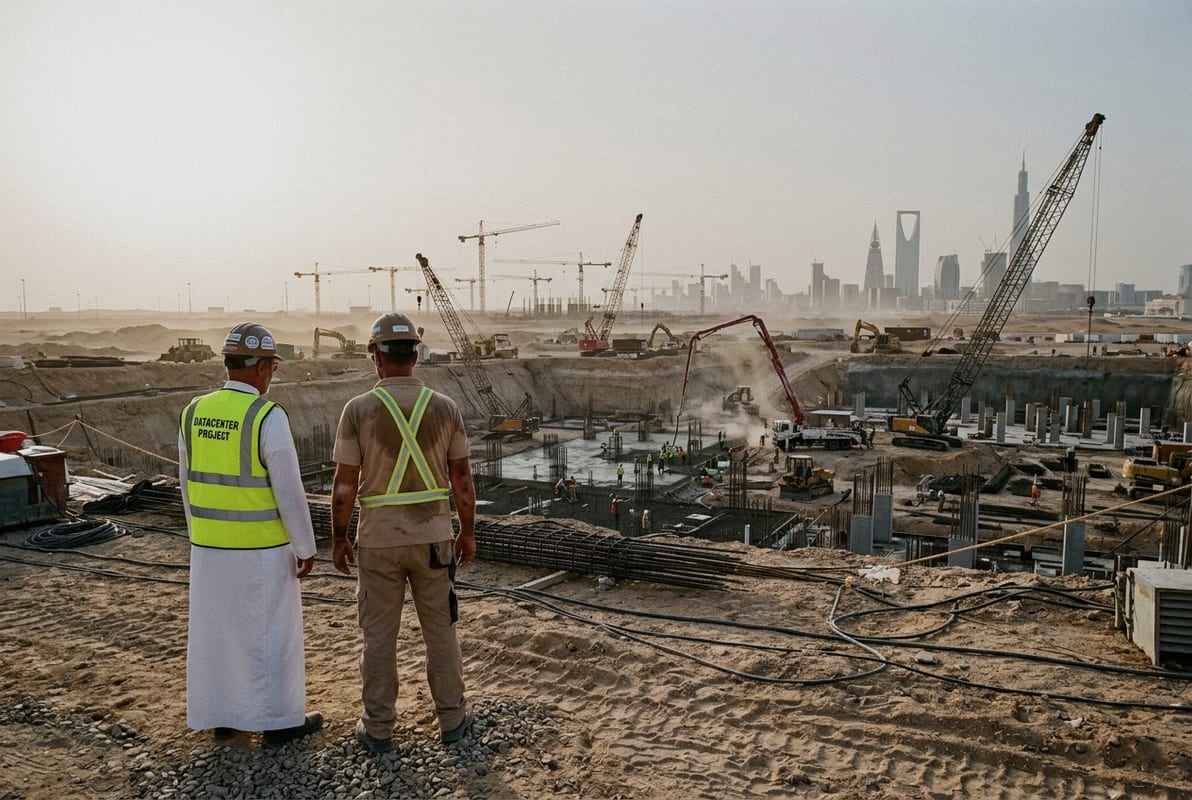
The numbers behind this opportunity are staggering. Gulf Cooperation Council 3 nations have committed a combined $100 billion for AI infrastructure through 2030. Saudi Arabia's Vision 2030 4 and the UAE's National AI Strategy 2031 are not vague policy papers. They are funded roadmaps with dedicated sovereign wealth behind them.
Gartner forecasts tech spending in the MENA region to hit $169 billion in 2026. Data center spending alone is projected to grow by 37%, reaching nearly $13 billion. These are not speculative figures. Contracts are being signed. Construction is underway. Hardware procurement is happening now.
| Investment Area | Estimated Scale | Key Drivers |
|---|---|---|
| AI data center construction | $13 billion by next year (37% growth) | Sovereign AI strategies, hyperscale demand |
| Total AI infrastructure through 2030 | $100 billion combined GCC commitment | Vision 2030, UAE AI Strategy 2031 |
| MENA tech spending (2026) | $169 billion | Digital transformation Middle East, cloud computing Middle East |
| G42 compute campus (UAE) | 5 GW capacity planned | AI training, generative AI Middle East |
For IT hardware distributors and storage suppliers, the practical steps are clear. First, understand which projects are active. Saudi Arabia's HUMAIN initiative and the UAE's Stargate project represent massive procurement pipelines. Second, focus on enterprise-grade HDDs 5 and server components. These projects need high-capacity, high-reliability storage. Desktop-grade drives will not cut it.
Third, build relationships with regional system integrators. Many Gulf-based integrators are scaling up fast and need reliable B2B sourcing partners who can deliver consistent supply, matched specifications, and bulk quantities. From our experience shipping enterprise HDDs to Middle East distribution partners, the biggest pain point is not price. It is supply continuity and model consistency across large orders.
Finally, pay attention to sovereign AI requirements. Governments want infrastructure they control. That means local data centers, local storage, and local partnerships. If you can support that vision with stable hardware supply, you are in a strong position.
One trade-off we constantly help buyers navigate is choosing between enterprise HDDs, server HDDs, and surveillance-grade drives — because each AI data center workload demands a different specification profile.
Regional AI data centers require enterprise-class HDDs with capacities from 8TB to 24TB, 7200 RPM spindle speeds, high MTBF ratings, and 24/7 duty cycle support — specifically designed for continuous AI training, inference workloads, and large-scale data archival.
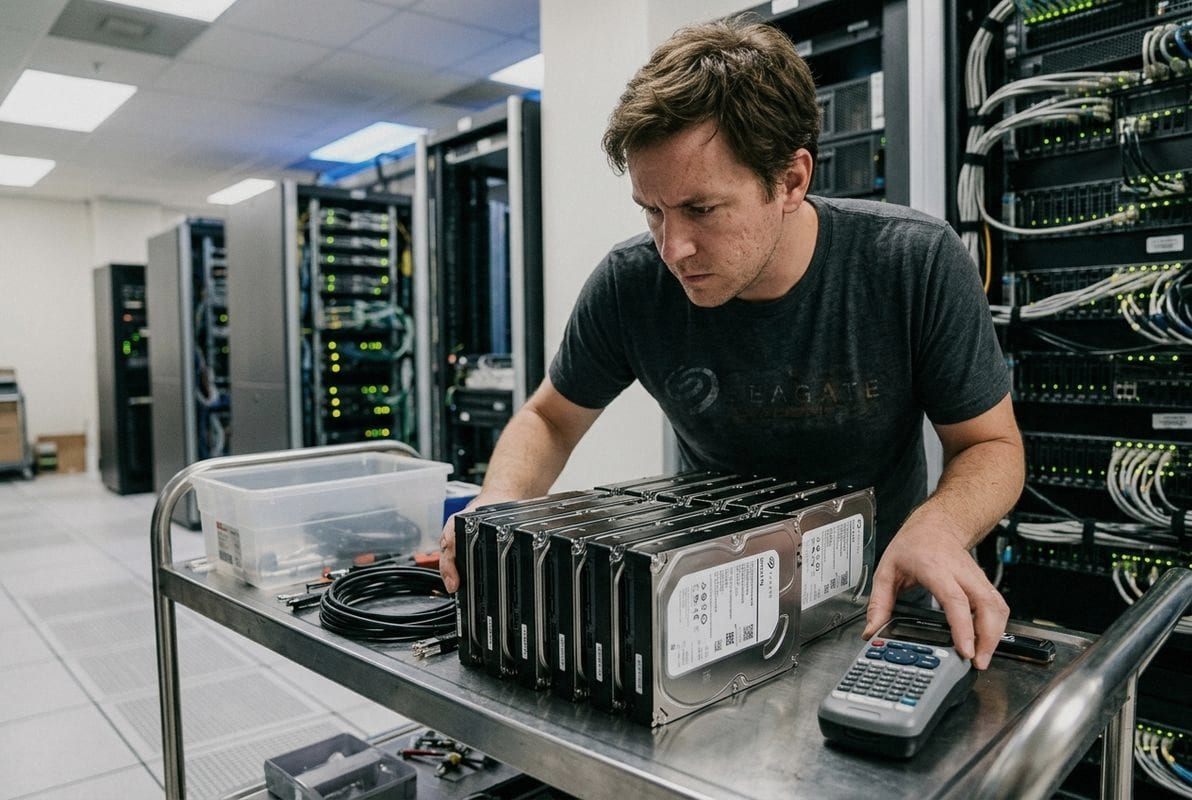
AI data centers are not like traditional cloud hosting facilities. They run GPU chips at full load for days or weeks at a time. The storage layer must keep up. AI training jobs pull massive datasets from disk. Inference pipelines write logs and model outputs continuously. Backup and archival systems store petabytes of training data.
Desktop HDDs are designed for eight hours of daily use. They will fail under 24/7 enterprise loads. NAS HDDs handle multi-bay vibration well but lack the sustained throughput enterprise environments need. Surveillance HDDs are optimized for sequential write — great for CCTV, but not ideal for the mixed read-write patterns of AI workloads.
Enterprise HDDs are built for this. They feature higher MTBF (mean time between failures 6), vibration resistance for dense rack environments, and firmware optimized for sustained throughput.
| Specification | Enterprise HDD (AI Data Center) | NAS HDD | Surveillance HDD |
|---|---|---|---|
| Capacity range | 8TB – 24TB+ | 2TB – 20TB | 1TB – 18TB |
| Spindle speed | 7200 RPM | 5400–7200 RPM | 5400–7200 RPM |
| Duty cycle | 24/7 continuous | 24/7 (NAS optimized) | 24/7 (write optimized) |
| MTBF | 2.0M–2.5M hours | 1.0M–1.2M hours | 1.0M hours |
| Workload rating | 550 TB/year | 180 TB/year | 180 TB/year |
| Vibration resistance | High (rotational & linear) | Moderate | Moderate |
| Best use case | AI training, inference, archival | File sharing, backup | Video recording, CCTV |
Not every rack in an AI data center does the same job. When we help B2B clients spec out bulk HDD orders for regional projects, we break it down by tier.
Tier 1 — AI Training Storage: This is the high-performance layer. Enterprise HDDs at 14TB to 24TB capacity, 7200 RPM, with the highest workload ratings. These drives feed data to GPU clusters running generative AI model training 7.
Tier 2 — Inference and Application Storage: Slightly less intense, but still 24/7. Enterprise HDDs in the 8TB to 16TB range work well here. These support real-time AI applications powering smart cities Middle East, autonomous systems, and digital transformation Middle East initiatives.
Tier 3 — Backup and Archival: This layer stores training datasets, model checkpoints, and compliance data. High-capacity enterprise or NAS HDDs (12TB to 20TB) are cost-effective choices. The key requirement is reliability over years, not peak throughput.
For large-scale AI projects in the Gulf, buyers typically need hundreds or thousands of identical drives. Model consistency matters. Firmware versions should match. Packaging must protect drives during international shipping. Our logistics process accounts for all of this. We work with buyers to confirm exact model numbers, batch quantities, and delivery schedules before orders ship.
A lesson we learned early in serving Gulf-region clients is that energy availability — not just capital — is the decisive factor shaping where hyperscale data centers get built.
The Middle East is becoming a global AI data center hub because it combines sovereign wealth, abundant low-cost energy, strategic geographic positioning between Europe, Asia, and Africa, and national AI strategies that prioritize infrastructure sovereignty and economic diversification.
Energy constraints are slowing data center expansion in North America and Europe. Grid capacity is limited. Permitting takes years. Power costs are rising. The Middle East faces none of these problems at the same scale.
Gulf states have abundant natural gas and are investing heavily in renewable energy. The cost of power for large-scale AI projects is expected to decrease by as much as 50% in the region. That is a massive competitive advantage. When you are running thousands of GPU chips around the clock for AI model training, power cost is the single largest operating expense. The ability to deliver power infrastructure quickly and efficiently is what will define the market's success over the next three to five years.
The Middle East sits at the crossroads of three continents. Data flowing between Europe, Asia, and Africa can route through Gulf-based data centers with lower latency than many alternatives. This geographic advantage is turning the region into what some analysts call a "new digital Silk Road."
For AI workloads specifically, this matters. Generative AI Middle East applications serving global users benefit from distributed compute. Companies training large models can split workloads across time zones. And as AI regulations Middle East evolve, the region is creating frameworks that attract — rather than deter — foreign investment.
There is a powerful drive toward sovereign AI across the Gulf. Nations want to control their own compute, data, and AI models. This is not just about technology. It is about national security, data privacy, and reducing reliance on foreign cloud providers.
Saudi Arabia and the UAE are identified as "AI Contenders" in global readiness assessments. They are not passive consumers of cloud computing Middle East services anymore. They are building their own independent ecosystems. The HUMAIN project in Saudi Arabia and the Stargate UAE initiative are prime examples.
| Metric | Current State | Projected (2030) |
|---|---|---|
| Regional data center capacity | ~1 GW | 3+ GW |
| AI data center market CAGR | — | ~28% |
| Saudi AI contribution to GDP | Growing | $135.2 billion (12.4% of GDP) |
| UAE AI contribution to GDP | Growing | ~14% of GDP |
| Total Middle East AI economic benefit | — | $320 billion |
The opportunity goes beyond hardware. Gulf nations are investing in talent development AI programs. Specialized universities and national training initiatives are building a local workforce capable of operating and innovating on top of this infrastructure. AI infrastructure is also a foundational element for ambitious smart cities Middle East projects — from NEOM in Saudi Arabia to Masdar City in the UAE.
This integration means sustained demand. Data centers are not one-time builds. They need ongoing storage expansion, hardware refresh cycles, and continuous component supply. For B2B hardware suppliers, this translates to recurring revenue opportunities, not just single project orders.
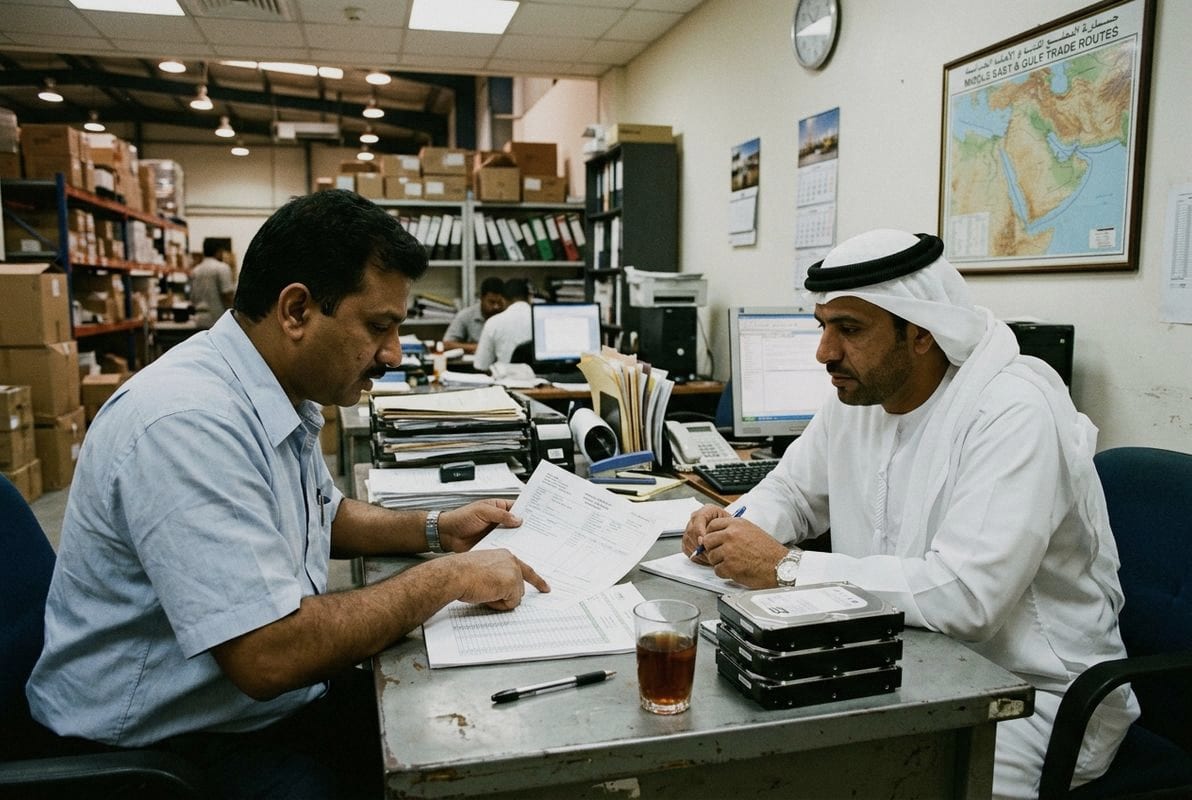
A buyer interaction that stuck with me involved a Dubai-based distributor who had lost a major contract because their previous supplier could not guarantee model consistency across a 2,000-drive order.
Source high-capacity server components for Middle East AI projects by partnering with B2B storage suppliers who offer bulk enterprise HDD availability, model-consistent batches, flexible logistics, and experience serving data center and system integration clients in the Gulf region.
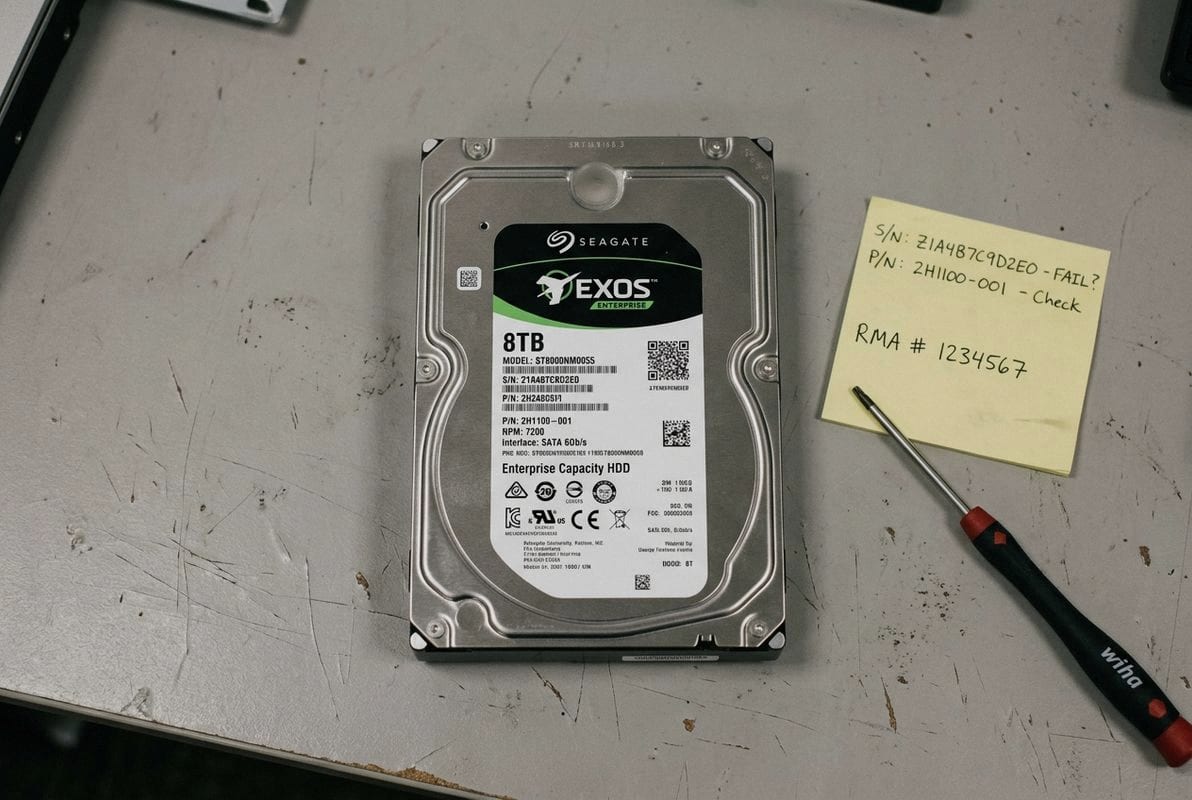
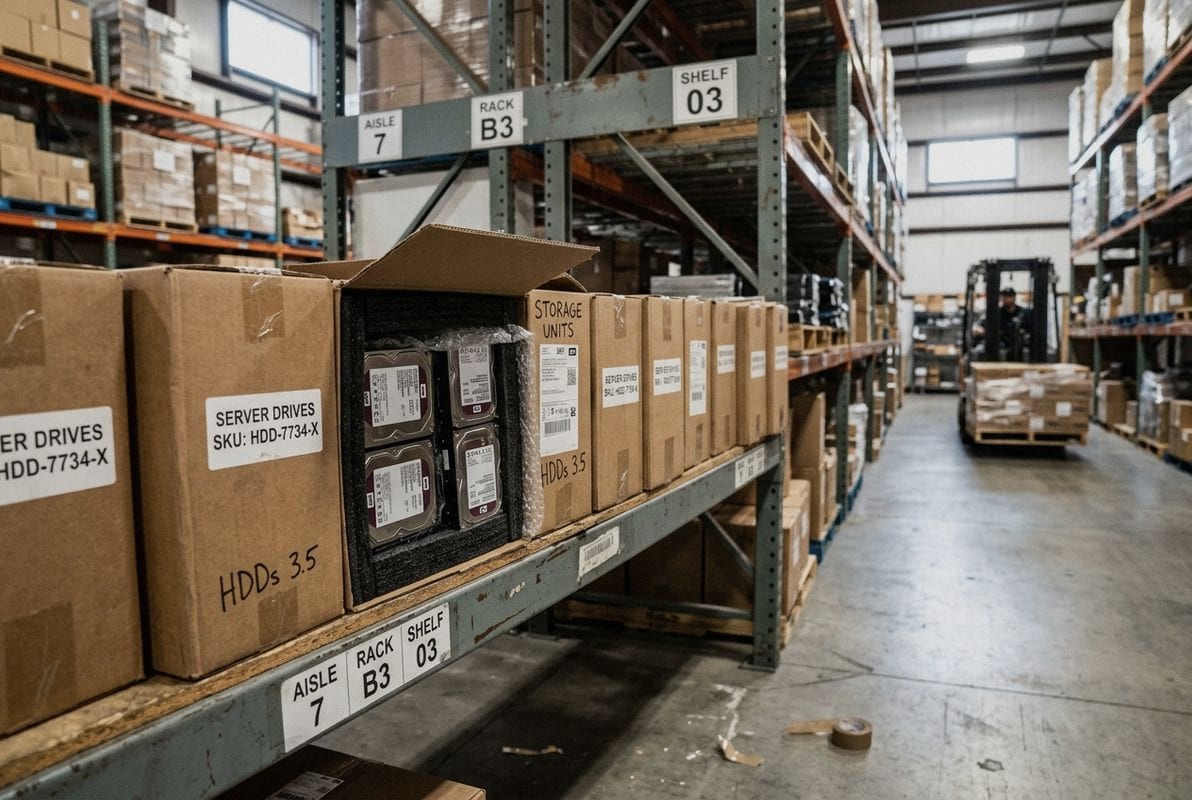
Large-scale AI projects in the Middle East require hundreds to thousands of identical enterprise HDDs, along with server-grade components. The challenge is not finding drives. The challenge is finding a supplier who can deliver the right drives, in the right quantity, with the right consistency, on a timeline that matches project milestones.
HDD markets fluctuate. Popular high-capacity models (16TB, 18TB, 20TB enterprise drives) face supply pressure when multiple hyperscale data centers order simultaneously. If you wait until a project contract is signed to start sourcing, you are already behind.
Here is what experienced Gulf-region integrators and distributors tell us they prioritize:
Model consistency. Every drive in a batch should be the same model, same firmware revision, same capacity. Mixed batches cause headaches in RAID configurations and storage array deployments.
Bulk availability. Can the supplier fulfill orders of 500, 1,000, or 5,000 units? Not every supplier can. Many wholesalers stock smaller quantities aimed at retail channels.
Application expertise. Does the supplier understand the difference between an enterprise HDD for AI training and a surveillance HDD for a CCTV project? Mismatched recommendations waste time and money.
Logistics and packaging. International shipping of HDDs requires proper anti-static packaging, shock protection, and customs documentation. Damaged drives on arrival destroy project timelines.
Communication and responsiveness. Gulf-region projects move fast. Procurement teams need suppliers who respond quickly, provide accurate stock information, and flag potential delays early.
Here is a step-by-step process we recommend to B2B buyers sourcing enterprise server components for AI projects:
Step 1 — Define the workload. Is this for AI training, inference, archival, or mixed use? This determines the HDD class and specifications.
Step 2 — Set capacity and quantity targets. Calculate total storage needs. Factor in redundancy (RAID overhead 8, hot spares). Add 10–15% buffer for future expansion.
Step 3 — Request model-specific quotes. Do not accept generic "enterprise HDD" quotes. Specify exact models. Ask about firmware versions and manufacturing dates.
Step 4 — Verify supply continuity. Ask the supplier about their ability to fulfill repeat orders. Large AI projects need phased deliveries, not one-time shipments.
Step 5 — Confirm logistics details. Agree on packaging standards, shipping method, insurance, and customs handling before the first shipment.
The region is entering what industry leaders call a new geopolitical reality. Supply chain security 9 and infrastructure sovereignty are as important as raw compute capacity. U.S. export restrictions 10 on advanced AI chips have recently been eased for Gulf states, which is a positive signal. But semiconductor dependencies remain a risk factor.
For HDD procurement specifically, the risk is more about supply allocation than export controls. When global demand for high-capacity enterprise drives spikes, lead times extend. Prices shift. Having a trusted B2B supplier with strong allocation relationships helps you stay ahead.
Our approach is straightforward. We maintain clear communication about availability. We do not promise unlimited stock or fixed pricing. Instead, we provide honest assessments of lead times, suggest alternative compatible models when primary choices face delays, and work with buyers to plan procurement in phases that match project timelines.
| Application Segment | Typical HDD Class Needed | Common Capacities | Key Requirement |
|---|---|---|---|
| AI training clusters | Enterprise HDD | 16TB – 24TB | High throughput, 24/7 duty |
| Inference servers | Enterprise / Server HDD | 8TB – 16TB | Low latency, reliability |
| Data archival | Enterprise / NAS HDD | 12TB – 20TB | High capacity, long lifespan |
| Smart city IoT storage | Surveillance / NAS HDD | 4TB – 12TB | Sequential write, cost efficiency |
| CCTV and security projects | Surveillance HDD | 4TB – 18TB | 24/7 write optimization |
| Cloud computing Middle East | Enterprise HDD | 14TB – 22TB | Scalability, workload rating |
The diversity of applications across the Middle East means there is no single "right" HDD. Each project segment has different needs. The value of working with a B2B supplier who understands these distinctions cannot be overstated. It saves procurement teams from costly mismatches and project delays.
The Middle East AI infrastructure boom is real, funded, and accelerating — creating sustained demand for enterprise HDDs, server components, and bulk storage hardware. If you are sourcing HDDs for distribution, AI data center projects, server expansion, or enterprise storage in the Gulf region, contact us with your target capacity, application, quantity, and preferred specifications. We are here to help you match the right hardware to the right workload.
1. Official website of the Gulf Cooperation Council, providing information about the organization. ↩︎
2. Wikipedia provides a clear definition and explanation of MTBF for reliability engineering. ↩︎
3. World Bank provides authoritative economic data on GCC nations. ↩︎
4. Official government portal detailing Saudi Arabia’s economic and social reform plan. ↩︎
5. Seagate, a leading manufacturer, defines enterprise hard drives and their key features. ↩︎
6. Provides foundational engineering background on MTBF metrics. ↩︎
7. IBM explains how generative AI models are trained to create new data. ↩︎
8. Explains the concept of RAID overhead and its impact on performance. ↩︎
9. IBM provides a clear definition and key aspects of supply chain security. ↩︎
10. Official US government bureau managing export control regulations. ↩︎