
Overpaying for a legacy Wi-Fi chip 1 feels frustrating—especially when the component turns out to be counterfeit. Our procurement team in Shenzhen and Hong Kong screens hundreds of QCA9563-AL3A quotes every quarter, and the price swings we see are staggering.
To evaluate QCA9563-AL3A pricing from Hong Kong, compare quotes against verified aggregator benchmarks like the $8.02 Octopart reference, factor in volume discounts at 1,000+ units, add landed costs including shipping and duties, and vet every supplier for authenticity before committing to any purchase order.
This guide breaks down the exact steps we follow internally—from verifying genuine stock and calculating volume thresholds, to understanding logistics costs and decoding wild price variations across Hong Kong suppliers Octopart reference 2. Whether you are sourcing 500 units for an IoT retrofit or 10,000 for a production run, the framework below will help you avoid overpaying and protect your supply chain 3.
A suspiciously low quote landed in our inbox last month—$3.50 per unit for QCA9563-AL3A from a Huaqiangbei broker 802.11n 3×3 MIMO 4. Our engineers flagged it immediately because the market floor for verified stock sits well above that level.
Verify genuine QCA9563-AL3A stock by cross-referencing quotes against Octopart’s $8.02 benchmark, requesting certificates of conformance and date codes, using X-ray or decapsulation testing for suspicious lots, and confirming the supplier’s authorized distributor relationships before placing any order.
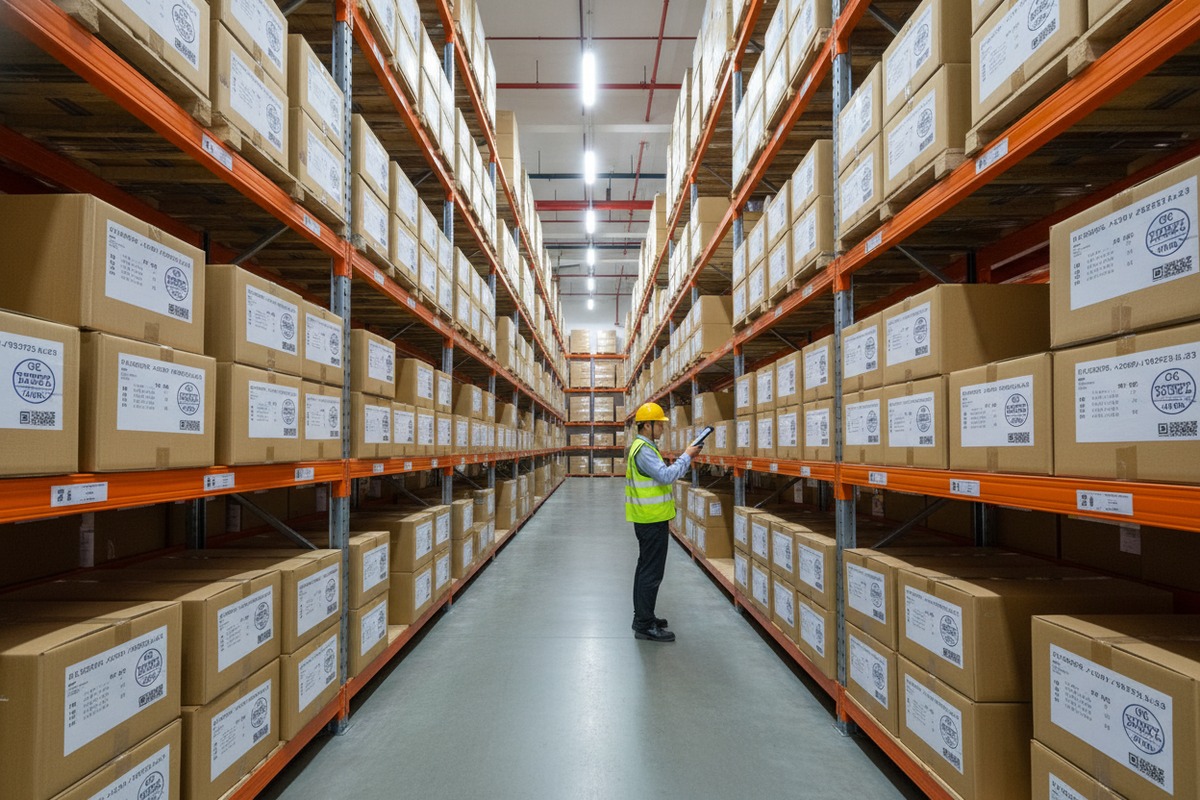
Before you can judge a price, you need to know the product Certificate of Conformance 5. The QCA9563-AL3A is Qualcomm Atheros 6‘ 802.11n 3×3 MIMO system-on-chip designed for 2.4 GHz WLAN platforms. It ships in a compact QFN package, supports data rates of 450 Mbps at 20 MHz and 600 Mbps at 40 MHz channel width, and draws low power suitable for battery-operated devices Moisture Sensitivity Level (MSL) 7. It carries ECCN 5A992c and HTS code 8542.39.00.01, and it is RoHS compliant. RoHS Directive 8
This chip is now a legacy part. Wi-Fi 6 and Wi-Fi 7 have overtaken it in new designs. But demand persists in IoT retrofits, industrial gateways, and cost-sensitive WLAN access points—particularly across the Middle East, Southeast Asia, and CIS markets where our clients operate.
| Source | Quoted Price | Notes |
|---|---|---|
| Octopart (aggregator) | ~$8.02/unit | Verified distributor pricing, single-unit reference |
| Lisleapex (broker) | ~7,190 (unclear scale) | Possibly CNY 7.19/unit at 1k MOQ |
| Jotrin (broker) | In-stock 10,000 units | Status listed as “unconfirmed” |
| Hong Kong spot market (2026) | $5–$10 small lots | Typical gray-market range |
| Bulk broker pricing | $3–$6 at high volume | Requires careful authentication |
If a quote falls significantly below $5 for small quantities, treat it as a red flag. Industry scans suggest up to 40% of low-cost Wi-Fi ICs sourced through Hong Kong gray markets are counterfeit, and older parts like the QCA9563-AL3A are prime targets.
Our dual-warehouse setup in Shenzhen and Hong Kong lets us physically inspect incoming stock before it ships to clients. That layer of quality control is something we consider non-negotiable for IC procurement.
When we build quotes for clients ordering enterprise-grade storage and ICs together, the volume breakpoint question comes up in nearly every conversation. Getting the threshold wrong means either overpaying per unit or committing to more inventory than you can move.
Target 1,000 units as the first meaningful discount tier for QCA9563-AL3A, where per-unit cost typically drops 15–25% below spot pricing. At 5,000+ units, expect an additional 10–15% reduction, and at 10,000+ units, negotiate broker-direct pricing in the $3–$6 range with proper authentication.
Hong Kong operates as a transshipment hub. Most QCA9563-AL3A inventory originates from Shenzhen factories that have excess stock, discontinued production lines, or canceled orders. Brokers in Hong Kong aggregate this supply and mark it up based on demand, lot size, and authentication status.
The economics are simple: larger orders reduce the broker’s per-unit handling, testing, and logistics cost. They pass part of that saving to you. But there is a catch—brokers often push high MOQs to lock in committed buyers, and some inflate spot prices for small orders to steer you toward bulk.
| Order Volume | Expected Price Range | Discount vs. Spot | Key Consideration |
|---|---|---|---|
| 1–99 units | $8–$10/unit | Baseline (spot) | High per-unit cost; good for prototyping |
| 100–499 units | $7–$8.50/unit | 5–12% off spot | Some brokers require MOQ of 100 |
| 500–999 units | $6–$7.50/unit | 12–20% off spot | Sweet spot for small production runs |
| 1,000–4,999 units | $5–$6.50/unit | 20–30% off spot | First major price break |
| 5,000–9,999 units | $4–$5.50/unit | 30–40% off spot | Requires verified large-lot supplier |
| 10,000+ units | $3–$5/unit | 40–50% off spot | Negotiate directly; demand CoC and testing |
Not every buyer needs 10,000 units. Here is how we advise our clients:
The sweet spot for most of our IC clients lands between 1,000 and 5,000 units. That range delivers meaningful savings without excessive inventory risk.
Running warehouses in both Shenzhen and Hong Kong has taught us something that surprises many first-time buyers: the unit price on your quote sheet is often less than half the story. Logistics, duties, and handling can add 15–30% to your landed cost 9.
Evaluate Hong Kong logistics impact by calculating landed cost: add the unit price, freight charges (air or sea), Hong Kong handling fees, export compliance costs for ECCN-controlled parts, destination country duties (typically 0–5% for ICs), and insurance. For QCA9563-AL3A, expect logistics to add $0.80–$2.50 per unit depending on volume and shipping method.

The term “landed cost” means the total price of a component when it arrives at your door. For QCA9563-AL3A sourced from Hong Kong, here is what goes into that number:
Unit price — The quote from your broker or supplier.
Freight — Air express (DHL, FedEx) for small lots typically costs $5–$12 per kg. Sea freight is cheaper for large volumes but adds 15–30 days of lead time.
Hong Kong handling and warehousing — Most brokers charge a handling fee of $0.02–$0.10 per unit for pick-and-pack, labeling, and palletization.
Export compliance — The QCA9563-AL3A carries ECCN 5A992c. While this classification generally allows export under License Exception ENC, documentation preparation adds cost. Post-2025 trade tensions have made Hong Kong a preferred neutral transshipment point for US-origin Qualcomm parts, but compliance paperwork adds $50–$200 per shipment.
Customs duties at destination — ICs under HTS 8542.39.00.01 often enter many countries at 0% duty, but some markets apply 3–5%. Check your local tariff schedule.
Insurance — Typically 0.3–0.5% of declared value. Worth every cent for a $30,000 IC shipment.
| Cost Component | 500 Units (Air) | 5,000 Units (Sea) |
|---|---|---|
| Unit price | $6.50 × 500 = $3,250 | $4.50 × 5,000 = $22,500 |
| Freight | $85 (air express) | $320 (sea LCL) |
| HK handling | $0.05 × 500 = $25 | $0.03 × 5,000 = $150 |
| Export compliance docs | $100 | $150 |
| Destination duty (3%) | $97.50 | $675 |
| Insurance (0.4%) | $13.00 | $90 |
| Total landed cost | $3,570.50 | $23,885 |
| Per-unit landed cost | $7.14 | $4.78 |
This table shows how the logistics premium shrinks at scale. For 500 units shipped by air, logistics adds $0.64 per unit (about 10%). For 5,000 units by sea, it adds $0.28 per unit (about 6%).
Many buyers ask us whether they should ship directly from Shenzhen instead. The answer depends on your destination. Hong Kong offers free port status 10—no export duties and simplified customs. But post-2025 trade dynamics have introduced a 20–30% premium on some US-origin Qualcomm parts transshipped through Hong Kong due to compliance overhead.
If your destination is in the Middle East, Southeast Asia, or South America, Hong Kong routing is typically efficient. For European or North American buyers dealing with stricter import scrutiny, shipping directly from our Shenzhen warehouse with full documentation can sometimes reduce total cost by 8–12%.
The key takeaway: never evaluate a QCA9563-AL3A quote without building a full landed-cost model first. A $4.50 unit price that becomes $5.30 landed still beats a $5.00 unit price that becomes $6.20 landed because of inefficient logistics.
We field this question weekly. A procurement manager emails us three quotes—$4.20, $7.90, and $12.50 for the same QCA9563-AL3A—and asks which one is real. The honest answer is: all three might be real, but they reflect very different supply chain stories.
Price variations for QCA9563-AL3A across Hong Kong suppliers stem from differences in stock authenticity (genuine vs. refurbished vs. counterfeit), sourcing channels (authorized vs. gray market), inventory age, broker margin strategies, MOQ requirements, and current spot-market volatility driven by legacy chip demand cycles.
To understand why the same chip can cost $4 from one supplier and $12 from another, you need to see what each price includes—and what it hides.
Authorized channel pricing ($8–$12+): Distributors like Mouser or Digi-Key source directly from Qualcomm or its authorized partners. Their prices include guaranteed authenticity, full traceability, and return policies. The premium is the cost of certainty. For an end-of-life chip like QCA9563-AL3A, authorized stock is scarce, which drives prices up further.
Gray-market broker pricing ($5–$8): This is the bulk of Hong Kong’s supply. Brokers acquire excess inventory from factories in Shenzhen, pull stock from canceled orders, or buy from smaller distributors offloading slow-moving parts. Quality varies. Some lots are perfectly genuine. Others have been stored improperly or relabeled.
Suspicious low-end pricing ($3–$5): At this level, the risk of counterfeit or refurbished parts rises sharply. Some of these ICs are harvested from scrapped PCBs, re-balled, and remarked. They may pass basic visual inspection but fail under load or after thermal cycling.
Several forces create price instability for QCA9563-AL3A in 2026:
Here is a practical approach we recommend to our clients:
The price you pay should reflect not just the chip itself, but the confidence you have in its authenticity and the reliability of your supplier’s logistics. A $6 genuine QCA9563-AL3A from a vetted Hong Kong broker is a far better deal than a $4 counterfeit that fails on your production line and costs you $20,000 in rework.
Evaluating QCA9563-AL3A pricing from Hong Kong requires more than comparing quotes. Verify authenticity, calculate landed costs, target smart volume thresholds, and understand why prices vary. A disciplined approach protects both your budget and your production line.
1. Defines legacy chips in the semiconductor industry. ↩︎
2. Explains Octopart as an electronic component search engine. ↩︎
3. Defines supply chain management in the electronics industry. ↩︎
4. Explains the 802.11n wireless standard and MIMO technology. ↩︎
5. Defines the Certificate of Conformance in manufacturing. ↩︎
6. Replaced with Qualcomm’s official networking products page, which covers Wi-Fi and is relevant to Qualcomm Atheros. ↩︎
7. Replaced with a comprehensive guide to Moisture Sensitivity Level (MSL) in electronics, mentioning the IPC/JEDEC standard. Anchor text updated for precision. ↩︎
8. Replaced with the official European Commission page on the RoHS Directive, an authoritative source. Anchor text updated for accuracy. ↩︎
9. Defines landed cost in international logistics and trade. ↩︎
10. Explains Hong Kong’s free port status and trade policy. ↩︎