Every week, our warehouse in Shenzhen ships thousands of microSD cards to distributors who still confuse A1 and A2 ratings—and that confusion costs them real money.
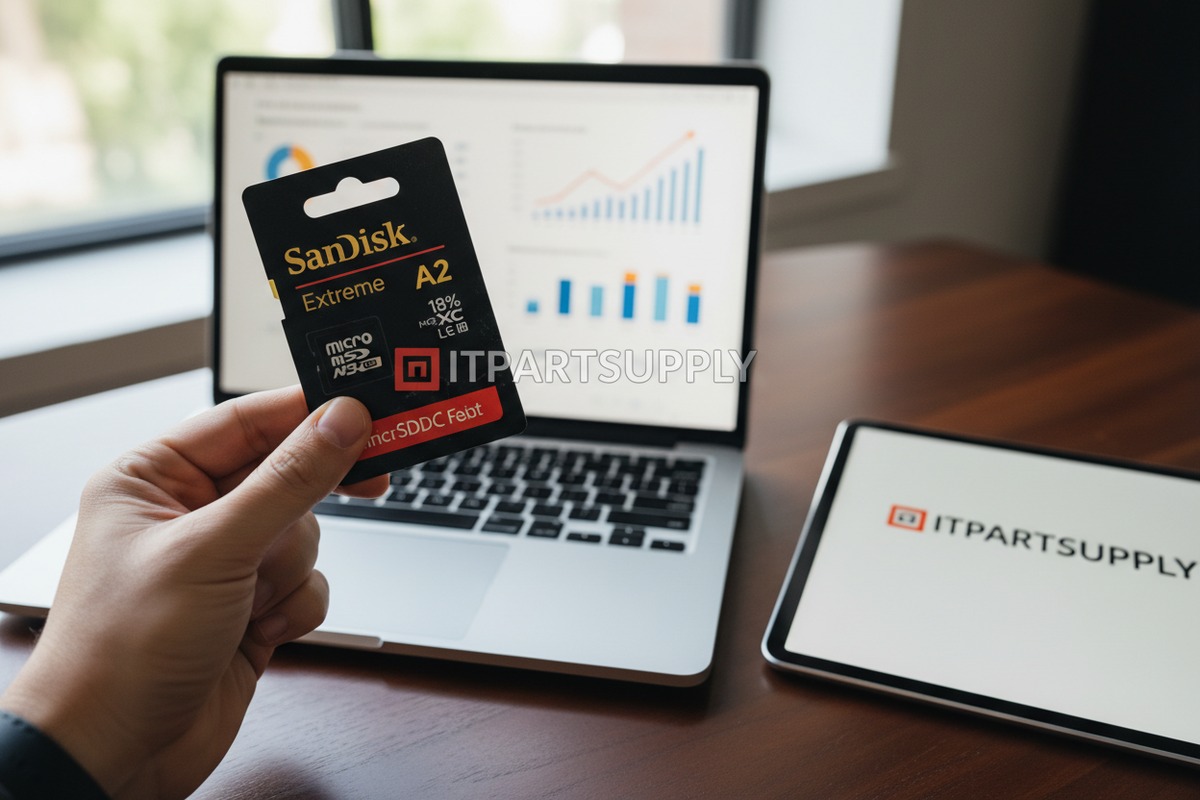
For professional sourcing buyers, A2 refers to the App Performance Class 2 standard defined by the SD Association. It guarantees minimum random read speeds of 4,000 IOPS and random write speeds of 2,000 IOPS, making A2-rated microSD cards essential for hardware projects, embedded devices, and enterprise applications that demand fast, sustained data access beyond simple sequential storage.
This guide breaks down exactly what the A2 specification means for your procurement decisions, your inventory strategy, your quality control process, and your end clients. App Performance Class 2 standard 1 Let’s walk through it section by section.
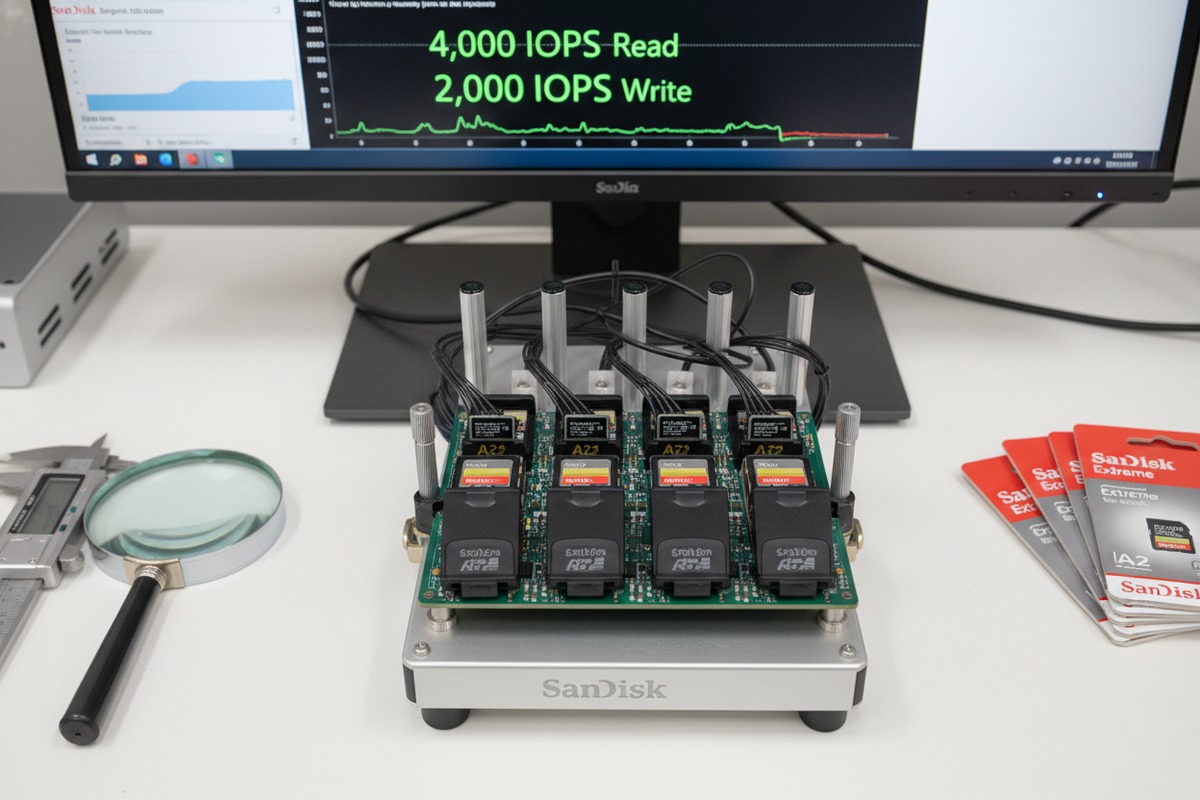
When we test microSD cards on our QC bench before shipment, the gap between A1 and A2 cards shows up immediately in random read/write benchmarks—and that gap translates directly to real-world device performance.
The A2 rating ensures your microSD cards deliver at least 4,000 IOPS random read and 2,000 IOPS random write, which means applications load faster, multitasking runs smoother, and devices like Android phones, drones, dashcams, and IoT gateways perform reliably under sustained workloads without bottlenecking on storage I/O.
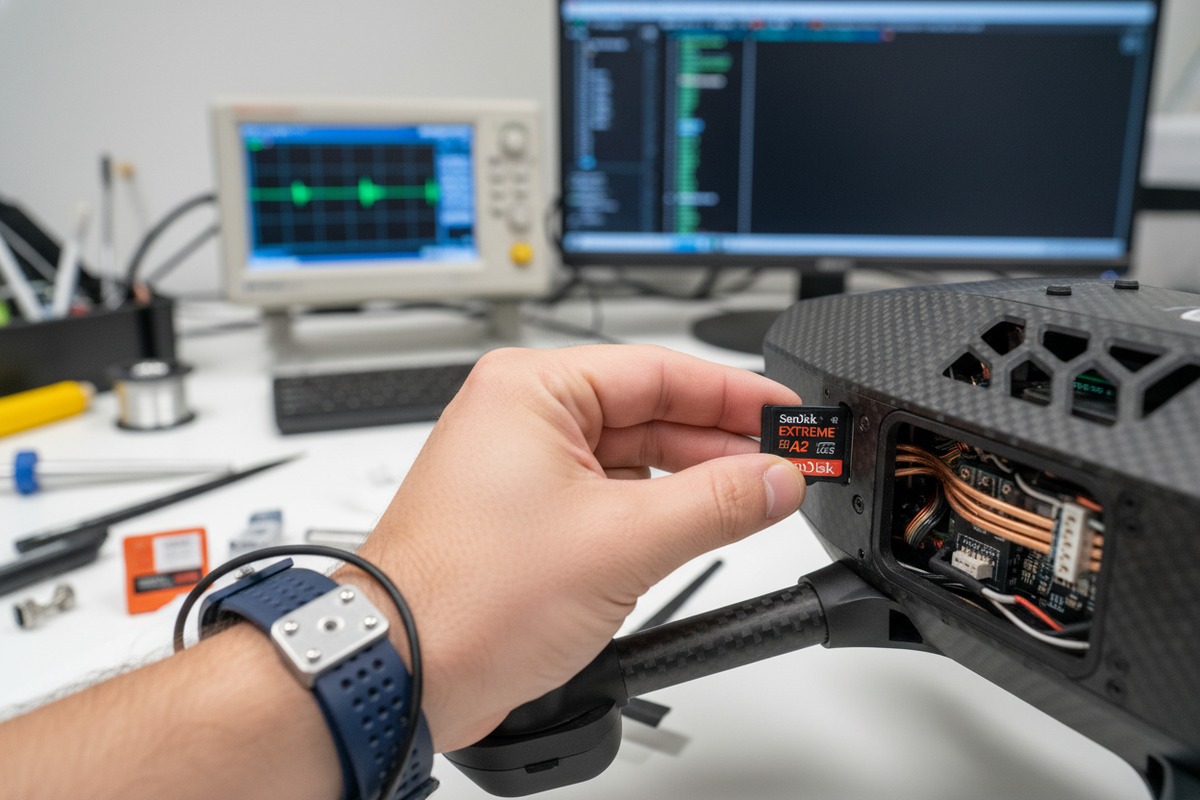
IOPS stands for Input/Output Operations Per Second 2. Sequential speed—the number you see printed large on a card's packaging (like 160 MB/s)—only tells you how fast the card handles big, continuous file transfers. But most real-world applications don't work that way. Apps open dozens of small files at once. Dashcams write video segments while simultaneously logging GPS data. Drones read flight controller instructions while recording 4K footage.
Random IOPS is the metric that governs this kind of scattered, simultaneous data access. The A2 standard sets the floor at 4,000 IOPS read and 2,000 IOPS write. The older A1 standard only requires 1,500 IOPS read and 500 IOPS write. That is a massive difference.
| Specification | A1 | A2 |
|---|---|---|
| Minimum Sequential Write | 10 MB/s | 10 MB/s |
| Minimum Random Read | 1,500 IOPS | 4,000 IOPS |
| Minimum Random Write | 500 IOPS | 2,000 IOPS |
| Command Queuing Support 3 | No | Yes |
| Cache Support | No | Yes |
| Typical Use Case | Basic app storage | Heavy multitasking, 4K, IoT |
The key takeaway: A2 cards support command queuing and cache management. These features let the card handle multiple data requests at the same time instead of processing them one by one. For hardware projects involving surveillance systems, fleet dashcams, or industrial automation panels, this is not optional. It is essential.
In our experience shipping to system integrators in Germany, Japan, and the Middle East, we see three hardware categories where A2 makes the biggest difference:
If your hardware project involves any multi-threaded data access, specifying A2 in your procurement RFP eliminates a major reliability risk.
Our sales team fields this question almost daily from wholesalers placing orders for 5,000 to 50,000 units—and the answer comes down to market trajectory, margin protection, and future-proofing your SKU catalog.
You should prioritize A2 because the global market is shifting decisively toward A2-rated cards as default specifications for smartphones, IoT devices, and embedded systems. Stocking A1-only inventory risks obsolescence, while A2 cards command 15–25% higher margins and satisfy the broadest range of downstream device requirements for your distribution clients.
Two years ago, A1 was the mainstream specification. Today, nearly every flagship and mid-range Android phone lists A2 as the recommended card class. Device manufacturers are writing A2 into their spec sheets because Android's Adoptable Storage feature 5 performs significantly better with A2-rated random I/O. If your distribution clients sell into the consumer electronics aftermarket, their customers are already asking for A2.
On the enterprise side, the shift is even more pronounced. Industrial automation panels, fleet management devices, and smart retail systems now specify A2 in their BOMs. Our clients in the Middle East, for example, switched their entire dashcam project inventory from A1 to A2 in 2024 after field failures linked to insufficient random write speeds.
| Factor | A1 Cards | A2 Cards |
|---|---|---|
| Average B2B Unit Price (64GB) | $4.50–$6.00 | $5.80–$8.00 |
| Typical Distributor Margin | 8–12% | 15–25% |
| Average Inventory Turnover | 45–60 days | 25–40 days |
| Return/Complaint Rate | 2–4% | <1% |
| End-of-Life Risk (2025–2027) | High | Low |
A2 cards move faster off the shelf. They generate fewer complaints because they meet the performance expectations of modern devices. And they carry better margins because the perceived value—backed by real performance data—justifies the price premium.
Here is a practical benefit many wholesalers overlook: A2 cards are backward compatible with A1 requirements. Every device that asks for A1 will work perfectly with an A2 card. The reverse is not true. By consolidating your inventory around A2 SKUs—particularly the SanDisk Extreme and Extreme Pro lines we stock in Shenzhen—you reduce the number of part numbers you need to manage, simplify your warehouse operations, and lower the risk of shipping the wrong spec to a client.
This matters especially for distributors serving multiple vertical markets. One A2 SKU can serve your surveillance client, your smartphone accessories client, and your IoT project client. An A1 SKU cannot.
A2 cards from tier-one brands like SanDisk carry embedded authentication features that are harder to replicate than older A1 product lines. When you source A2 inventory through a traceable channel—like our Shenzhen/Hong Kong dual-warehouse system—you get batch-level documentation that protects your reputation and your downstream clients. We will cover authentication in detail in the next section.
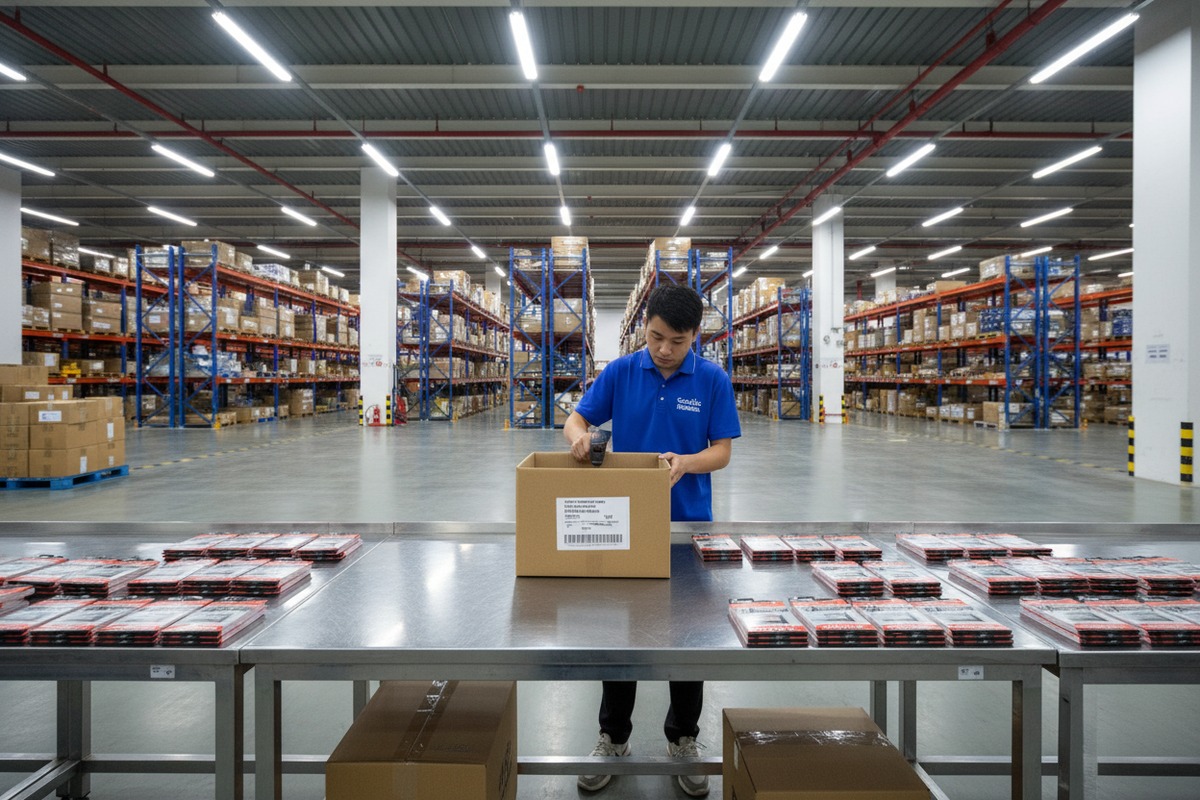
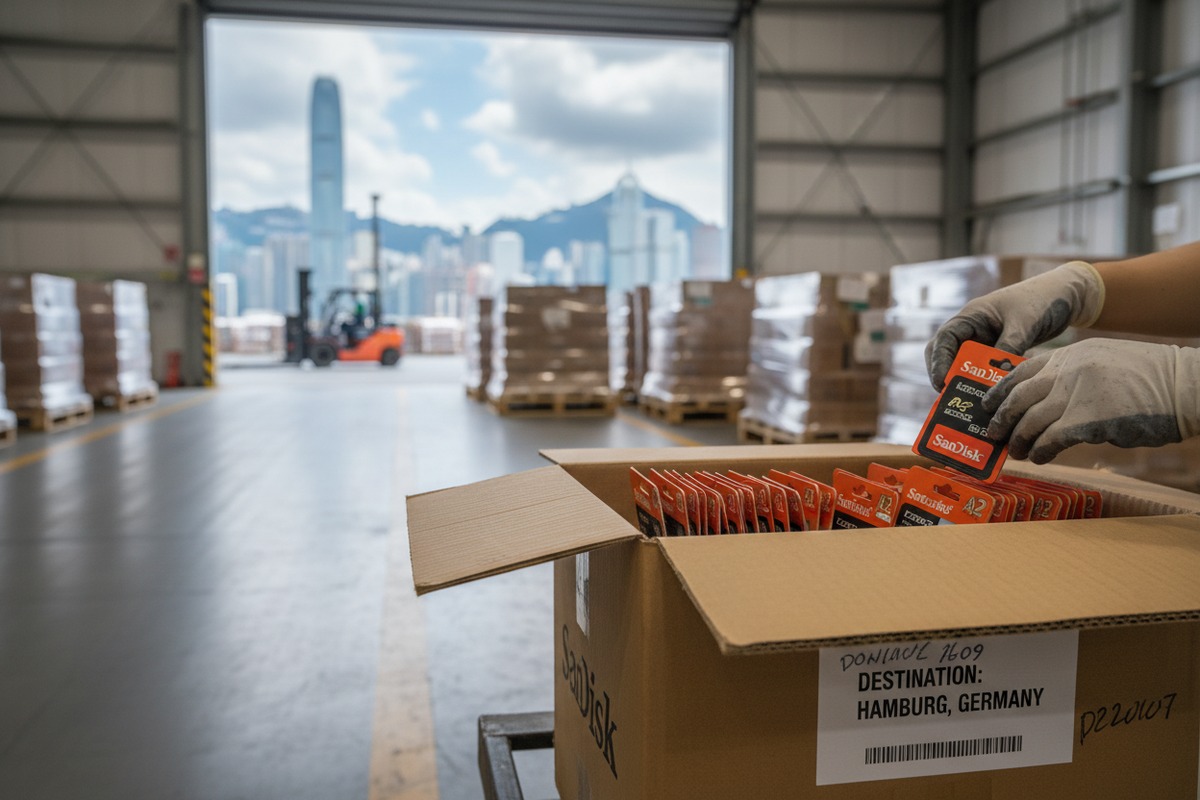
When we receive incoming stock at our Hong Kong inspection facility, every single batch goes through a multi-point verification process before it enters our saleable inventory—because in this market, one counterfeit shipment can destroy a distributor's reputation overnight.
To ensure originality and batch consistency, professional buyers should verify holographic packaging seals, cross-check batch lot codes with the manufacturer's database, conduct random sample benchmarking against A2 IOPS thresholds, and source exclusively from distributors who provide full chain-of-custody documentation from factory to warehouse.
The microSD market has one of the highest counterfeit rates in all of consumer electronics. Industry estimates suggest that 20–30% of flash storage products 6 sold through unverified channels are either counterfeit, refurbished, or re-labeled with inflated specifications. A card labeled "A2" that actually performs at A1 levels—or worse—will cause device failures in the field. For a project procurement manager specifying A2 for a 10,000-unit dashcam deployment, even a 5% counterfeit rate means 500 potential field failures, warranty claims, and a damaged relationship with the end client.
At our Shenzhen and Hong Kong facilities, we follow a strict authentication workflow:
If you are evaluating a new supplier for A2 microSD cards, here is a checklist of questions that separate reliable partners from risky ones:
| Question | Good Answer | Red Flag |
|---|---|---|
| Can you provide lot code traceability? | Yes, with factory-level documentation | "We buy from multiple sources" |
| Do you benchmark random IOPS per batch? | Yes, with test reports available | "Sequential speed is tested" |
| What is your return/defect rate? | Below 1% | No data or "very low" |
| Where is your stock held? | Named warehouse with inspection | Drop-shipped from unknown origin |
| Can you supply consistent batches for repeat orders? | Yes, with reserved allocation | "Depends on availability" |
For one-time retail resale, minor batch variation may not matter much. But for project-based procurement—where thousands of cards go into identical devices on the same production line—batch consistency is critical. Different production batches can have slightly different controller firmware, NAND flash generations 8, or wear-leveling algorithms. These differences can cause unpredictable behavior when devices are deployed at scale.
We address this by reserving single-batch allocations for project clients. When a client orders 20,000 units for an industrial IoT rollout, we pull from one production lot. This eliminates the variance that comes from mixing batches and gives the client a single test baseline to validate against.
Through years of supplying system integrators and project procurement managers across the US, Germany, Japan, and the Middle East, our team has built a clear picture of which enterprise verticals gain the most from upgrading to A2-rated storage.
Enterprise clients running surveillance systems, commercial drone fleets, Android-based point-of-sale terminals, industrial IoT edge devices, and digital signage networks benefit most from A2. These applications depend on sustained random read/write performance for multitasking, real-time data logging, and application execution directly from the microSD card.
Not every enterprise client needs A2. A simple data logger writing one temperature reading per minute will work fine with a basic Class 10 card. The value of A2 emerges when devices run applications from the card, handle multiple simultaneous data streams, or operate in environments where storage I/O is a bottleneck.
Here is how we categorize the opportunity for our distribution partners:
Security and surveillance. This is the single largest vertical we serve. Modern IP cameras with edge analytics run AI inference models locally while recording H.265 video 9. The random I/O demands are intense. A1 cards degrade within months under this workload. A2 cards, particularly the SanDisk Extreme series rated for high-endurance use, sustain performance over years. We supply multiple surveillance integrators in Germany and the Middle East who have standardized on A2 across their entire product line.
Commercial and industrial drones. Drone operators need cards that can simultaneously write 4K video, log flight telemetry, and support onboard mapping software. Our clients in Japan's agricultural drone sector switched to A2 after experiencing data corruption with A1 cards during long mapping flights. The 2,000 IOPS random write minimum eliminated the issue entirely.
Android enterprise devices. This includes POS terminals, warehouse scanners, self-service kiosks, and rugged field tablets. These devices typically use Adoptable Storage to expand limited internal memory. A2 ensures that apps installed on the card launch and run as if they were on internal flash. One of our US-based distribution clients supplies a chain of 3,000 retail kiosks—every unit runs on a SanDisk Extreme A2 card sourced through our Shenzhen warehouse.
Digital signage. Signage players loop video and image content from microSD cards. The I/O demands are lower than surveillance, but A2 provides headroom for dynamic content updates and remote management agents running in the background.
Automotive and fleet management. Dashcams and telematics units benefit from A2, especially when the device records video while simultaneously uploading data via cellular connection.
| Enterprise Vertical | A2 Benefit Level | Primary Requirement | Recommended SKU |
|---|---|---|---|
| Security / Surveillance | Very High | Sustained random write, endurance | SanDisk Extreme 128GB–256GB |
| Commercial Drones | Very High | Simultaneous multi-stream I/O | SanDisk Extreme 64GB–128GB |
| Android POS / Kiosks | High | App execution speed | SanDisk Extreme 64GB |
| Digital Signage | Moderate | Content playback with background tasks | SanDisk Extreme 32GB–64GB |
| Fleet Dashcams | Moderate | Continuous write with data logging | SanDisk Extreme 128GB |
| Basic Data Logging | Low | Sequential write only | A1 or Class 10 sufficient |
When you present A2 to your enterprise clients, focus on total cost of ownership 10, not just unit price. A2 cards cost 15–25% more upfront. But they reduce field failure rates, extend replacement cycles, and lower the support burden on your client's IT team. For a 10,000-unit deployment, even a 2% reduction in field failures saves thousands of dollars in truck rolls, warranty replacements, and downtime.
We provide our distribution partners with comparison data sheets and benchmark reports they can share directly with their enterprise clients. This makes the upsell conversation easier and positions you as a knowledgeable sourcing partner, not just a parts supplier.
A2 is not a marketing label. It is a measurable performance standard that directly impacts your hardware projects, your inventory strategy, your quality assurance process, and your enterprise client relationships. Source smart, verify every batch, and stock for where the market is going—not where it was.
1. Official SD Association page detailing App Performance Class 1 and 2 standards. ↩︎
2. Wikipedia provides a clear definition of Input/Output Operations Per Second (IOPS). ↩︎
3. Explains command queuing technology for storage devices, including its benefits for performance. ↩︎
4. Official website of the organization that defines SD card standards. ↩︎
5. Official Android documentation explaining adoptable storage and other storage types. ↩︎
6. IBM provides a comprehensive overview of flash storage technology and its applications. ↩︎
7. Replaced with an authoritative source from the National Institutes of Health (NIH) providing a comprehensive overview of chain of custody. ↩︎
8. Explains different NAND flash types (SLC, MLC, TLC, QLC) and their characteristics. ↩︎
9. Wikipedia provides a comprehensive overview of H.265 (HEVC) as a video compression standard. ↩︎
10. IBM provides a clear definition of Total Cost of Ownership (TCO) including direct and indirect costs. ↩︎