
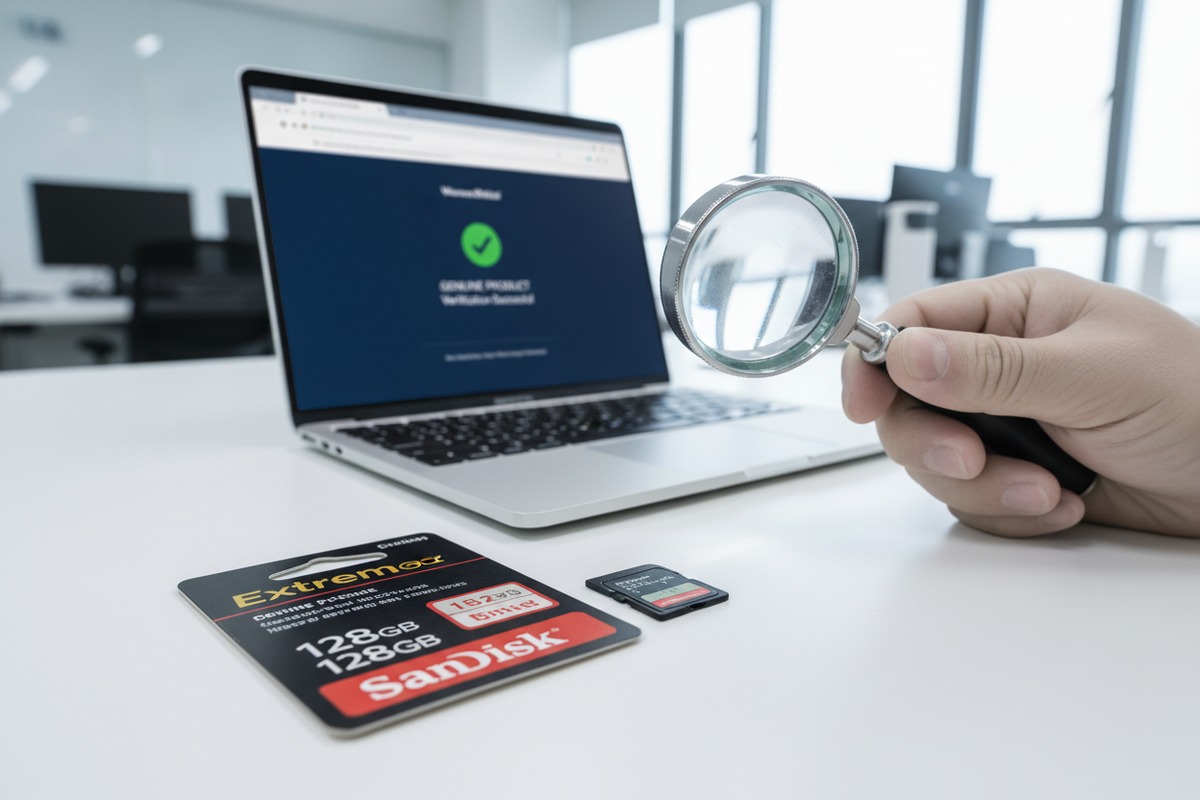
From time to time, we heard client come to us and claimed that they have been scammed by vendors for fakes Sandisk SD or MicroSD cards, and even some of these products slipping through trusted channels Western Digital’s official site 1. The problem is getting worse, not better.
To verify genuine SanDisk Extreme microSDXC cards, inspect packaging print quality and laser etching, cross-reference part numbers on Western Digital’s official site, run full-capacity tests using H2testw or F3, and request traceability documents including Certificates of Authenticity and chain-of-custody records from your supplier.
Below, I walk you through the exact steps our team uses — from visual inspection to software testing to supplier vetting F3 on Linux/Mac 2. Whether you buy 100 or 100,000 units, these methods will protect your business.
When we first started scaling our SanDisk distribution from Shenzhen and Hong Kong, packaging errors were the number one way we caught counterfeits before they reached our clients in Germany and the Middle East.
Genuine SanDisk Extreme packaging features razor-sharp printing, accurate Pantone color matching, scannable QR codes linking to Western Digital’s official domain, and laser-etched text on the card itself that feels raised to the touch — fakes typically show blurry fonts, color shifts, and smooth flat printing.
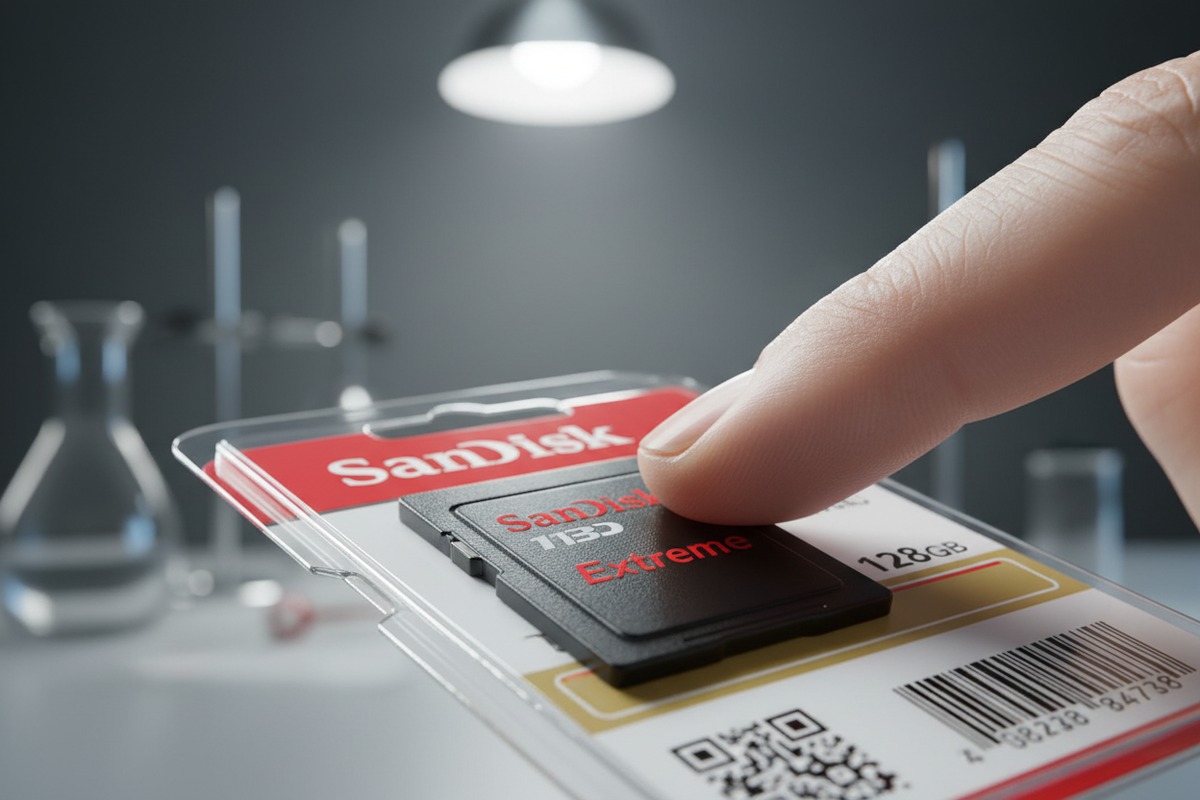
The first thing you should examine is the outer packaging. Genuine SanDisk Extreme cards use a black, red, and gold color scheme with extremely precise ink registration. Hold the package under bright light. Look for:
Remove the card from the packaging. Genuine SanDisk Extreme microSDXC cards 3 have specific tactile and visual traits that are very hard to replicate.
| Feature | Genuine Card | Counterfeit Card |
|---|---|---|
| “SanDisk” logo on front | Slightly embossed, raised texture | Flat, printed only |
| Back finish | Glossy, smooth, reflective | Matte or inconsistently glossy |
| Font color on front | Accurate red-orange, consistent | Dark orange or shifted hue |
| Serial/lot number on back | Thin, precise laser etching | Thick, printed, or missing |
| Card thickness | Uniform, meets SD spec | Slightly thicker or thinner |
| Adapter quality | Sturdy, sharp molding edges | Flimsy, blurred edge lines |
Run your fingernail gently across the SanDisk logo on the card’s front face. On a genuine card, you will feel a slight ridge. Counterfeit cards are almost always perfectly smooth because the logo is merely printed. This single test catches a surprising number of fakes in our incoming inspection process.
Every genuine SanDisk Extreme card has a model/part number printed on both the card and the packaging. For example, SDSQXAV-128G-GN6MA is a legitimate 128GB Extreme model. Go to Western Digital’s official product page and search this number. The specs listed — capacity, speed class, UHS rating — must match exactly. If the part number returns no result or points to a different product, reject the batch.
Our quality control team does this for every single shipment. It takes five minutes and has saved us from accepting fraudulent stock on multiple occasions.
Visual inspection is only the first gate.
Use H2testw on Windows or F3 on Linux/Mac to write data across the card’s full claimed capacity and verify it — genuine cards show zero errors, while fakes reveal their true size (often 32GB or 64GB pretending to be 128GB–512GB). Supplement with CrystalDiskMark for speed benchmarks against rated A2/V30 specs.
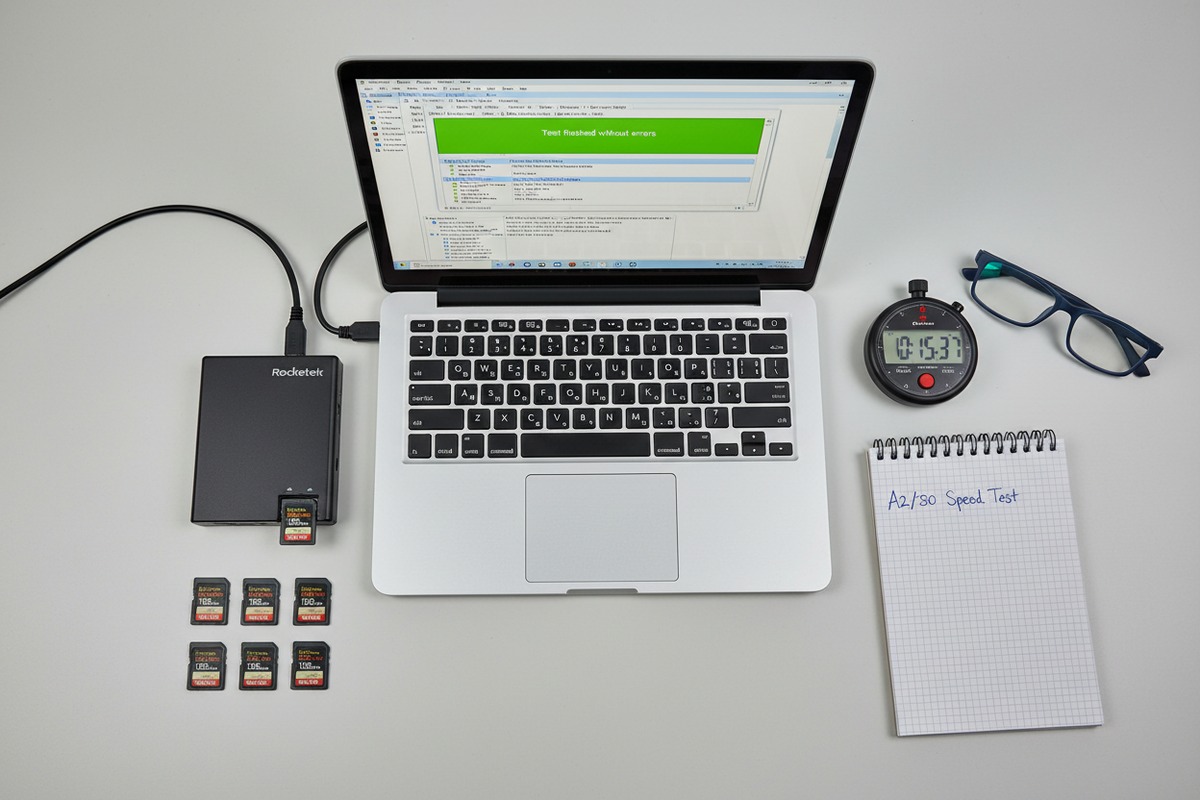
H2testw 4 is a free Windows utility that writes test data to every sector of the card, then reads it back. If the card claims to be 512GB but only 64GB is real, H2testw will report massive errors after the 64GB mark. A genuine card will return “Test finished without errors.”
Here is how to use it:
The wait time is the main downside. For bulk shipments of thousands of cards, we suggest to test a statistically significant random sample — typically 5% to 10% of the batch, plus any cards that looked questionable during visual inspection.
| Tool | Platform | Test Type | Speed | Best For |
|---|---|---|---|---|
| H2testw | Windows | Full write + verify | Slow (hours) | Definitive capacity proof |
| F3 (Fight Flash Fraud) | Linux / Mac | Full write + verify | Slow (hours) | Non-Windows users |
| FakeFlashTest | Windows | Quick scan | Fast (minutes) | Preliminary screening |
| CrystalDiskMark 5 | Windows | Speed benchmark | Fast (minutes) | Verifying A2/V30 rated speeds |
| AndroBench | Android | Speed benchmark | Fast (minutes) | Mobile field testing |
Capacity fraud is the most common scam, but speed fraud is also real. A genuine SanDisk Extreme 128GB card should deliver approximately 200MB/s sequential read and 90MB/s sequential write. If CrystalDiskMark shows only 14–25MB/s, the card is almost certainly fake — regardless of what the label says.
For A2-rated cards, suggest to check random read/write IOPS. The A2 spec 6 requires at least 4,000 read IOPS and 2,000 write IOPS. Fakes rarely achieve even 10% of those numbers.
We recommend a tiered testing approach. First, run FakeFlashTest or a quick scan on 20–30% of the batch. This catches the obvious fakes in minutes. Then, run full H2testw verification on 5–10% of the cards that passed the quick scan. If any card in a batch fails, quarantine the entire batch and escalate with your supplier immediately.
This is the exact protocol we suggust our client to follow before any shipment leaves our Hong Kong warehouse. It protects both us and our downstream partners.
Over years of serving procurement managers in Germany, the United States and beyond, we have learned that documentation is the backbone of trust in B2B flash memory sourcing. No document, no deal — that is our internal rule.
Request a Certificate of Authenticity (COA) or Manufacturer’s Declaration of Conformity (MDoC) from Western Digital, a chain-of-custody record showing each handler from factory to your dock, lot/date codes matching the physical cards, and the supplier’s authorized distributor agreement or proof of sourcing from WD-authorized channels.
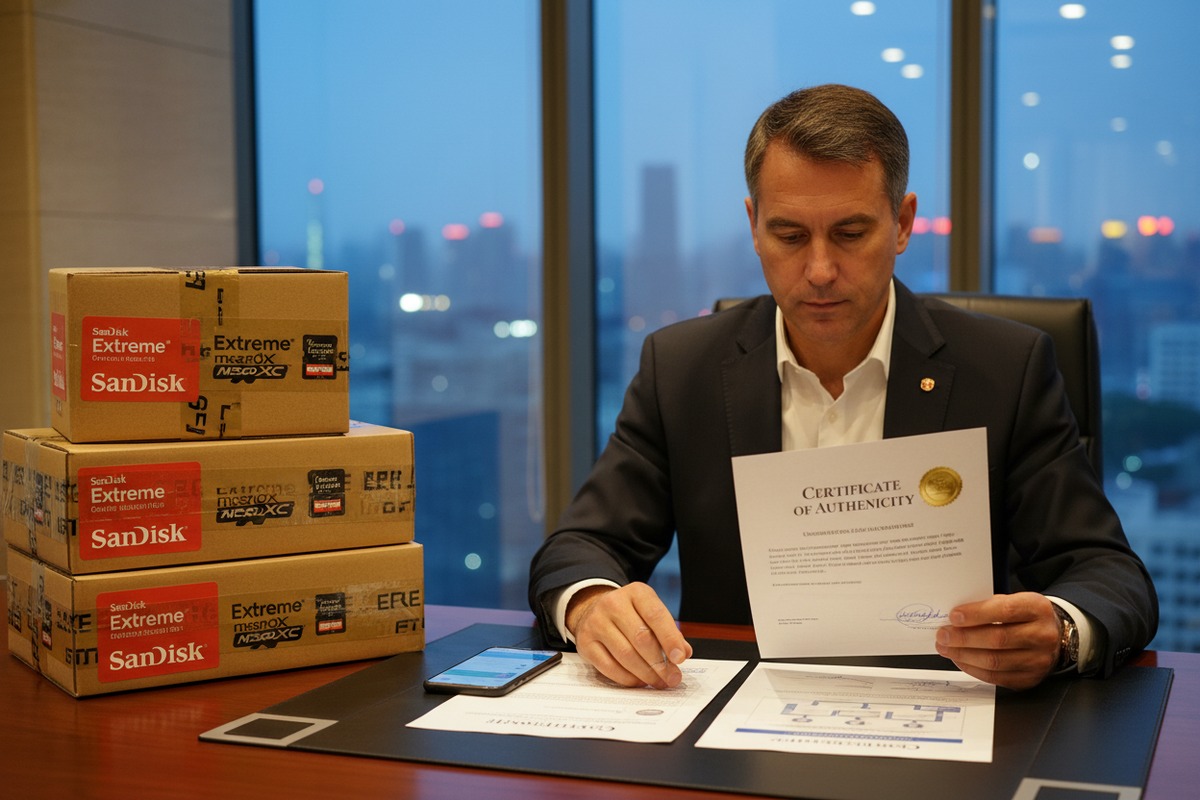
When evaluating a new or existing supplier for SanDisk Extreme microSDXC cards, you should request and verify the following documents before committing to any purchase order.
| Document | What It Proves | Red Flag If Missing |
|---|---|---|
| Certificate of Authenticity (COA) 8 | Product is genuine per manufacturer | High risk of counterfeit |
| Manufacturer’s Declaration of Conformity (MDoC) 9 | Meets stated specs and standards | Cannot verify performance claims |
| Chain of Custody 10 / Traceability Report | Every handler from WD factory to you | Unknown sourcing, possible gray market |
| Authorized Distributor Agreement | Supplier has in-direct WD/SanDisk relationship | May be sourcing from unvetted brokers |
| Lot/Date Code Documentation | Matches physical product batch codes | Possible mixed or relabeled batches |
| Commercial Invoice from Upstream Source | Confirms legitimate purchase price | Suspiciously low cost suggests fakes |
This is something I always advise our clients to do — and it is part of our own supplier vetting process. Check the supplier’s visibility across major B2B and social media platforms. Are they active on LinkedIn, Alibaba, or industry trade forums? Do they have verifiable trade references from other buyers? A supplier with a strong, consistent online presence and real client testimonials is far less likely to deal in counterfeit goods.
We also look at how long the supplier has been in business, whether they have participated in trade shows like Global Sources or Hong Kong Electronics Fair, and whether their listed address matches an actual commercial facility. These checks take less than an hour but provide enormous peace of mind.
There is no public serial number verification portal for SanDisk cards as of now. However, you can contact Western Digital’s support team directly. Send them clear photos of the card (front and back), the packaging, and the lot/date codes. Their team can confirm whether the product matches their manufacturing records. We have done this multiple times for high-value orders, and WD’s support team has always been responsive.
When our sales team at ITPARTSUPPLY evaluates new upstream sources — even ones with impressive-looking websites — we follow a strict red-flag checklist that has helped us maintain our reputation for genuine, traceable inventory.
Key red flags include pricing more than 30–50% below market rate, reluctance to provide traceability documents, inconsistent or missing part numbers, brand-new supplier entities with no trade history, stock photos stolen from official SanDisk listings, and refusal to allow pre-shipment inspection or independent testing of sample units.
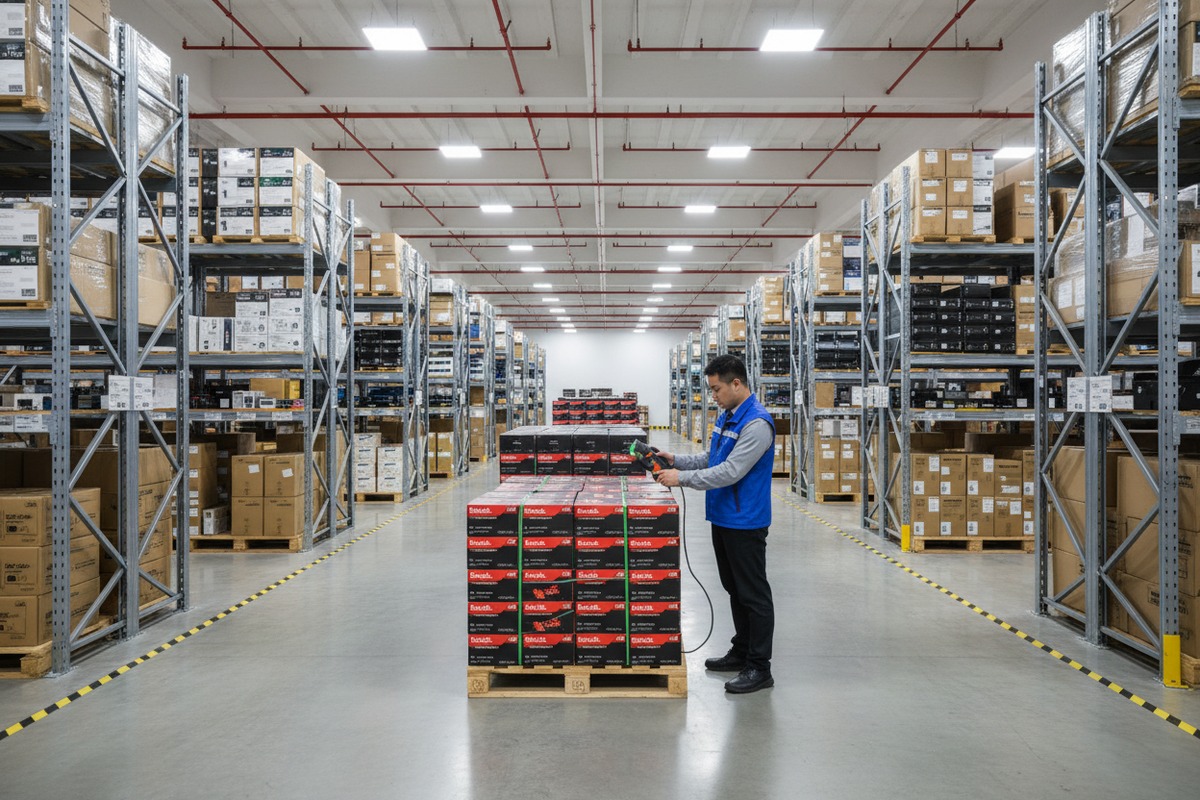
If a deal looks too good to be true, it almost certainly is. Genuine SanDisk Extreme 512GB cards have a known market cost. When a new distributor offers them at 40–60% below the going wholesale rate, something is wrong. Counterfeit cards cost a fraction of genuine ones to produce — a reprogrammed 32GB card relabeled as 512GB might cost the fraudster under $2 to make.
We track pricing trends monthly across authorized channels. Any offer significantly below our baseline triggers an automatic review before we even respond.
Beyond price, pay attention to how the supplier communicates and operates:
This is a quick field test that our inspection team uses. Gently flex the microSD card between your fingers. Genuine SanDisk cards are built with robust materials and resist bending. Counterfeit cards often flex easily, and in some cases, the plastic shell separates to expose the tiny NAND chip inside. A genuine card will feel solid and resilient. This is not a definitive test, but it adds another data point to your evaluation.
In our years of B2B distribution, we have found that the most reliable indicator of a trustworthy supplier is consistency. Consistent pricing, consistent documentation, consistent communication, and consistent product quality over multiple orders.
We also recommend starting with a small trial order. Buy 100 units or MOQ Quantity. Test them rigorously. Only after the trial passes all checks should you scale up to bulk orders. This approach has saved our clients — from e-commerce resellers in the USA to system integrators in Japan — from significant losses.
Counterfeit methods vary by region and evolve constantly. In 2025, Western Digital issued specific warnings about a surge in fake 512GB and 1TB Extreme Pro cards entering global markets. These newer fakes feature improved packaging that is harder to distinguish visually. The 512GB and larger capacities are prime targets because they command higher prices and are in strong demand for drones, 4K video, and dashcams.
Stay informed. Follow industry news from sources like Western Digital’s official announcements, Tom’s Hardware, and AnandTech. Knowledge is your best defense.
Verifying genuine SanDisk Extreme microSDXC cards requires a layered approach — visual inspection, software testing, document verification, and rigorous supplier vetting working together to protect your business.
Need a reliable, traceable source for genuine SanDisk Extreme microSDXC cards? Contact Yige Xu at [email protected] or visit www.itpartsupply.com for bulk pricing for authentic products only. We normally ship from Hong Kong with full traceability support.
1. Main corporate website for the manufacturer, Western Digital. ↩︎
2. Official GitHub repository for the F3 (Fight Flash Fraud) open-source tool. ↩︎
3. Official product page for the SanDisk Extreme microSDXC cards. ↩︎
4. Reputable download source for the H2testw software utility. ↩︎
5. Official website for the CrystalDiskMark benchmarking software. ↩︎
6. Official SD Association explanation of the A2 Application Performance Class. ↩︎
7. Wikipedia explains the underlying NAND flash memory technology. ↩︎
8. Wikipedia provides a general definition of a Certificate of Authenticity. ↩︎
9. Authoritative source from the European Commission on Declarations of Conformity. ↩︎
10. Wikipedia provides a clear definition of Chain of Custody relevant to supply chains. ↩︎