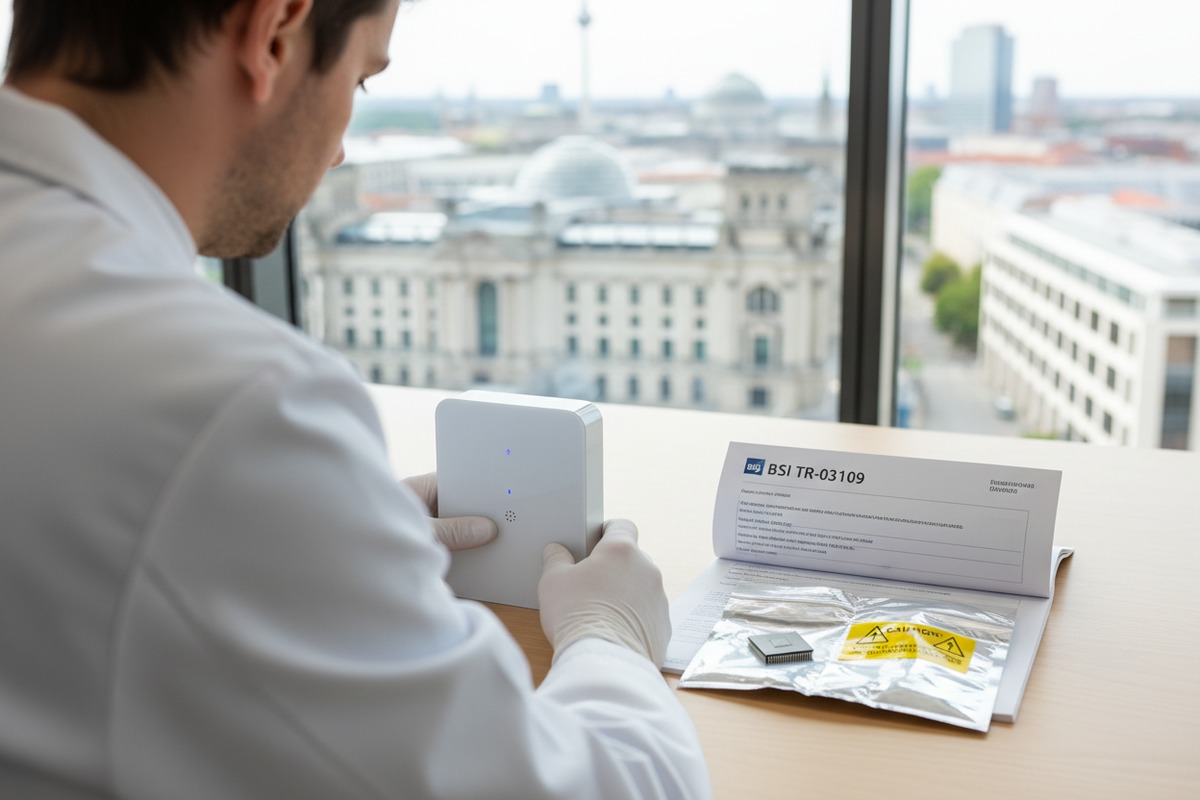
When our engineering team began sourcing Wi-Fi chipsets for a European smart gateway project, the Qualcomm QCN-6112 appeared on nearly every shortlist Common Criteria security module approval 1. It promises Wi-Fi 6 speeds 2, low power draw, and compact packaging. But a closer look at Germany’s regulatory landscape 3 raised serious red flags.
The Qualcomm QCN-6112-0-DRQFN116-TR-01-0 is a capable Wi-Fi 6/6E chipset for general IoT and smart home applications. However, it lacks BSI TR-03109 certification, Common Criteria security module approval, and PTB metrological testing, making it unsuitable as a standalone solution for regulated German Smart Meter Gateways (SMGWs).
Germany’s intelligent metering system 4 (iMSys) has some of the strictest gateway requirements in the world. Below, we break down how the QCN-6112 measures up, where to source it, what frequency and regulatory challenges exist, and how to secure stable supply if you do choose this chip for non-regulated smart home projects.
Every time we evaluate a new chipset at our Shenzhen facility, the first step is mapping its specs against the target market’s requirements. For Germany, that means asking hard questions about certification, security, and network architecture.
The QCN-6112 delivers strong Wi-Fi 6 performance with up to 2.4 Gbps throughput, Bluetooth 5.0, and tri-band support. Yet it falls short of German SMGW technical mandates, which require BSI TR-03109 compliance, an integrated CC-certified security module, and strict HAN/LMN/WAN network partitioning that this chip alone cannot provide.
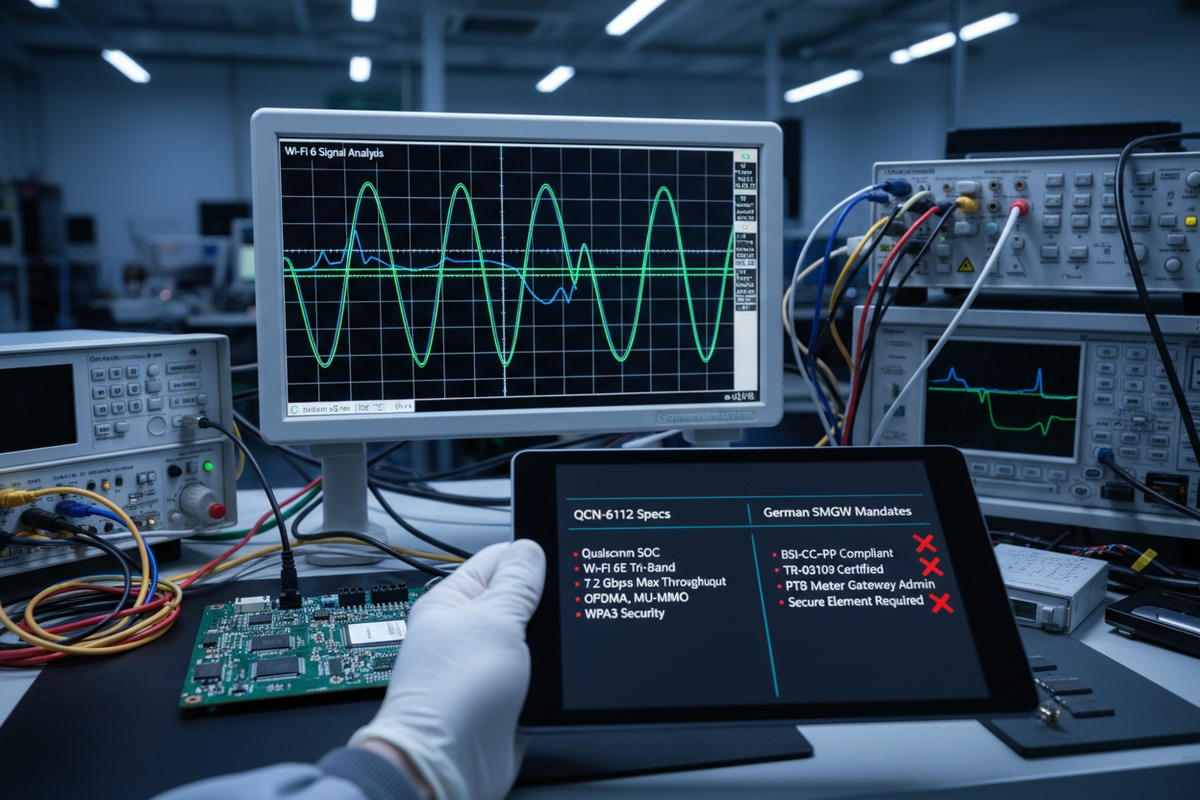
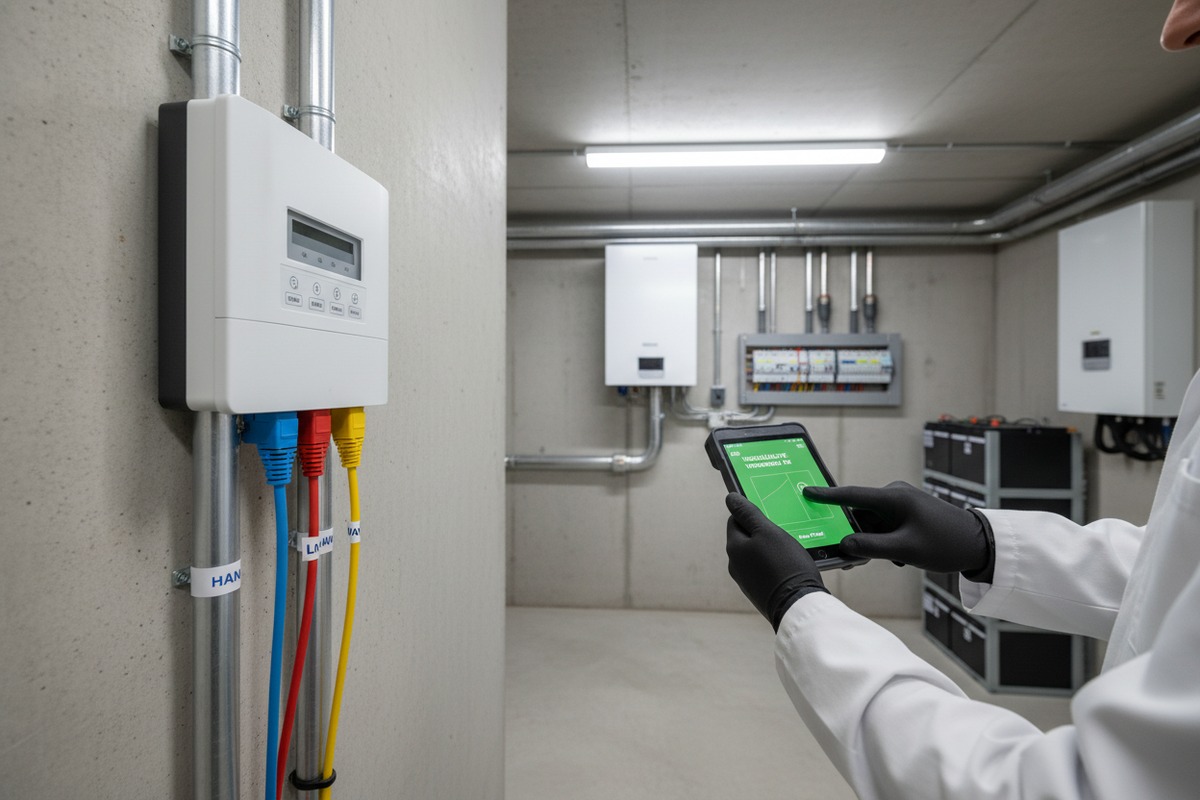
German SMGWs sit at the center of the intelligent metering system. They connect three distinct networks: the Home Area Network (HAN) 5, the Local Metrology Network (LMN), and the Wide Area Network (WAN). Each network has strict isolation requirements. The SMGW must manage data flows between smart meters, utilities, grid operators, and end consumers — all through encrypted channels.
The QCN-6112 handles Wi-Fi connectivity well. It supports 2.4 GHz, 5 GHz, and 6 GHz bands. It includes WPA3 encryption 6. It runs on low power. These are solid features for a consumer smart home hub. But a German SMGW is not a consumer device. It is classified as critical infrastructure.
The core issue is not raw wireless speed. The QCN-6112 can push data fast enough. The gaps lie in what surrounds that connectivity.
| Performance Area | QCN-6112 Capability | German SMGW Requirement | Gap? |
|---|---|---|---|
| Wi-Fi throughput | Up to 2.4 Gbps (Wi-Fi 6) | Not the primary bottleneck | No |
| Encryption | WPA3, basic TLS | TLS + CMS with BSI PKI | Yes |
| Security module | None integrated | CC-certified module (BSI-CC-PP-0073) | Yes |
| Network partitioning | Single-network Wi-Fi | HAN/LMN/WAN strict isolation | Yes |
| Metrological approval | None | PTB-A 50.8 type examination | Yes |
| Tariff use case support | Not applicable | Tariff cases 1,2,6,7,9,10,14 | Yes |
This does not mean the chip is useless in a German smart home context. In our experience building gateway hardware for European clients, Wi-Fi chipsets like the QCN-6112 can serve as a sub-component. For example, it could handle HAN-side connectivity within a larger, fully certified SMGW platform. The chip would manage device discovery, onboarding, and local data transfer. But the security, WAN communication, and metrological functions must come from other certified components.
Think of it this way: the QCN-6112 is a capable engine, but the German SMGW requires a fully inspected vehicle — chassis, brakes, airbags, and all.
German SMGWs increasingly need edge computing for local data processing, real-time analytics, and grid optimization. The QCN-6112 is a connectivity chip, not a processor. It does not handle complex computation. Your gateway design would need a separate application processor to meet these demands. This is standard in most gateway architectures, but it adds another layer of integration and testing.
Our procurement team handles thousands of IC orders every month from our Shenzhen and Hong Kong warehouses. We know firsthand that sourcing authentic Qualcomm chips requires careful vetting of every link in the supply chain.
Authentic, factory-sealed Qualcomm QCN-6112-0-DRQFN116-TR-01-0 chips can be sourced through authorized Qualcomm distributors, trusted B2B IC suppliers like ITPARTSUPPLY with dual Shenzhen-Hong Kong warehouses, and verified platforms such as Alibaba 1688 Shop. Always verify original packaging, moisture sensitivity labels, and lot traceability codes before purchasing.
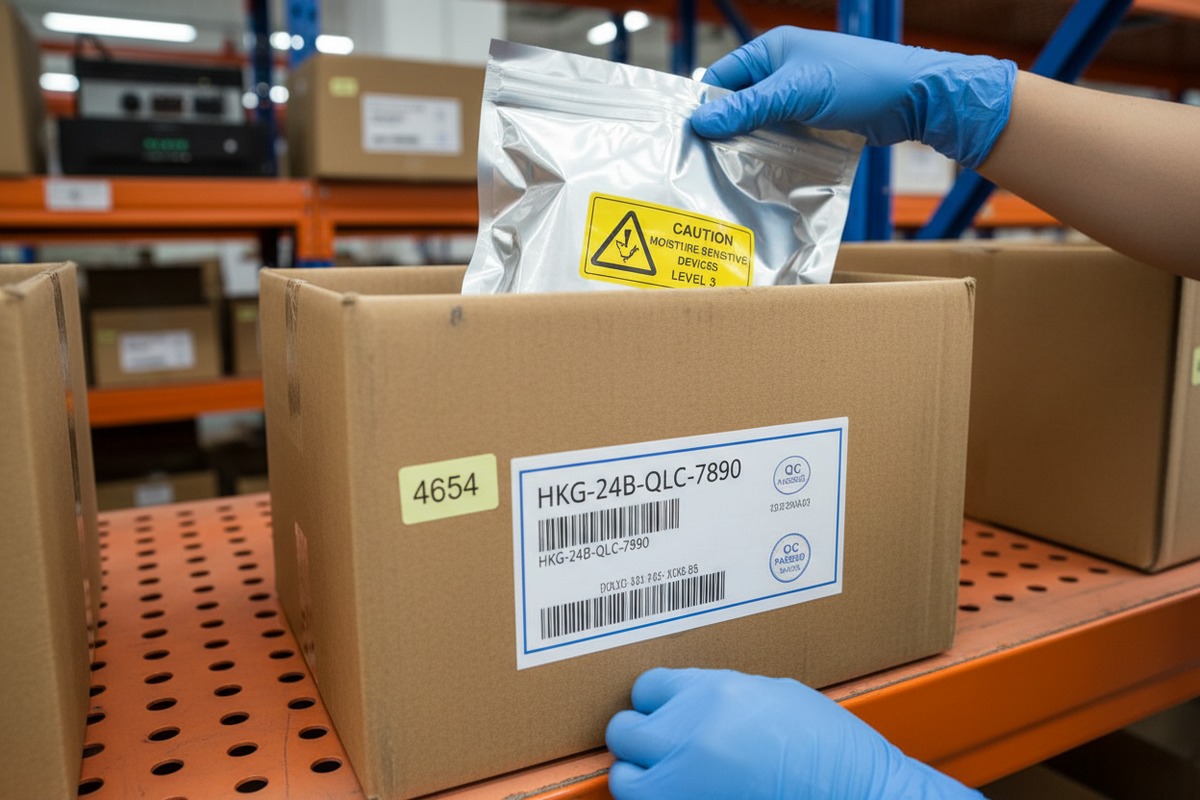
When our warehouse team receives QCN-6112 shipments, they check several markers. The chips arrive in industrial brown corrugated cardboard boxes. Each box carries a white label with alphanumeric codes, a QR code for lot tracking, and often a blue quality control stamp. Inside, the chips sit in reflective silver foil moisture-sensitive bags with a yellow caution label showing a Level 3 moisture sensitivity rating.
These details matter. Counterfeit ICs 7 are a real problem in global electronics sourcing. A missing moisture sensitivity label or mismatched lot code can indicate repackaged or recycled parts.
| Sourcing Channel | Pros | Cons | Best For |
|---|---|---|---|
| Authorized Qualcomm distributor | Guaranteed authenticity, warranty | Higher MOQ, longer lead times | Large-scale production runs |
| ITPARTSUPPLY (Shenzhen/HK) | Competitive pricing, fast shipping, verified stock | Requires buyer due diligence | Mid-to-high volume B2B orders |
| Alibaba International | Wide supplier range, price comparison | Risk of counterfeit if unverified | Initial sourcing and quotes |
| Broker market | May have rare stock | Highest counterfeit risk | Emergency orders only |
From our years in the IC supply business, here is the verification process we follow:
Shenzhen is the global hub for electronic component sourcing. Hong Kong provides free-port logistics advantages. Together, they offer the fastest route to get Qualcomm chips to European factories. Our dual-warehouse setup means we can ship from whichever location offers better customs routing for your destination. For German manufacturers, Hong Kong often provides smoother export documentation.
During our product testing for European shipments, frequency band compliance is always one of the first checkboxes. Different countries allow different spectrum allocations, and Germany adds its own regulatory layer on top of EU rules.
The QCN-6112 supports 2.4 GHz, 5 GHz, and 6 GHz Wi-Fi bands, which align with EU and German frequency allocations for Wi-Fi 6/6E. However, for regulated German Smart Meter Gateways, frequency band support alone is insufficient — the device must also comply with BSI TR-03109, FNN interoperability specifications, and the Metering Point Operation Act (MsbG), none of which the QCN-6112 currently satisfies.
Let us start with the good news. The QCN-6112’s tri-band support covers all relevant Wi-Fi frequencies used in Germany.
The 2.4 GHz band provides broad coverage and backward compatibility. The 5 GHz band offers faster speeds with less interference. The 6 GHz band (Wi-Fi 6E) is the newest addition. Germany, following EU decisions, has opened the lower 6 GHz band (5945–6425 MHz) for indoor use. The QCN-6112 can operate across all three.
For a non-regulated smart home gateway — one that controls lights, thermostats, security cameras — this frequency support is excellent. It covers every common IoT protocol and device type.
The problem is not the radio. It is everything else.
German Smart Meter Gateways fall under the Metering Point Operation Act (MsbG) 8 and the Digitalization of the Energy Transition Act (GDEW). These laws mandate that every SMGW must pass:
| Regulatory Requirement | Description | QCN-6112 Status |
|---|---|---|
| BSI TR-03109-1 | Functional requirements and interoperability | Not certified |
| BSI TR-03109-2 | Security module specifications | No integrated module |
| BSI TR-03109-3 | Cryptographic requirements | Basic TLS only |
| BSI TR-03109-4 | PKI for smart metering | Not supported |
| BSI TR-03109-6 | Gateway administration | Not tested |
| PTB-A 50.8 | Metrological accuracy | Not examined |
| FNN specifications | Grid interoperability | Not validated |
| §14a EnWG CLS interface | Controllable local systems | Not integrated |
A newer requirement is the Controllable Local Systems (CLS) interface. Under §14a of the German Energy Industry Act (EnWG), smart gateways must manage energy-related devices like EV chargers and heat pumps. The CLS interface allows distribution system operators (DSOs) to send control signals through the SMGW.
The QCN-6112 does not include CLS functionality. This would need to be built at the system level, with dedicated software and hardware layers.
If your project targets general smart home applications in Germany — not the regulated metering infrastructure — the QCN-6112 is a strong candidate. It meets CE marking requirements, supports EU frequency allocations, and provides WPA3 security. For this market segment, the chip performs well. The critical distinction is between a “smart home gateway” and a “smart meter gateway.” These are very different products under German law.
Our production planning team deals with component shortages every quarter. We have learned — sometimes the hard way — that securing supply for specialized ICs like the QCN-6112 requires proactive strategy, not last-minute scrambling.
To ensure stable QCN-6112 supply and competitive pricing, manufacturers should establish relationships with authorized distributors and verified B2B suppliers, negotiate long-term purchase agreements, maintain buffer inventory in dual-location warehouses, and monitor Qualcomm’s product lifecycle announcements to avoid end-of-life disruptions in gateway production schedules.
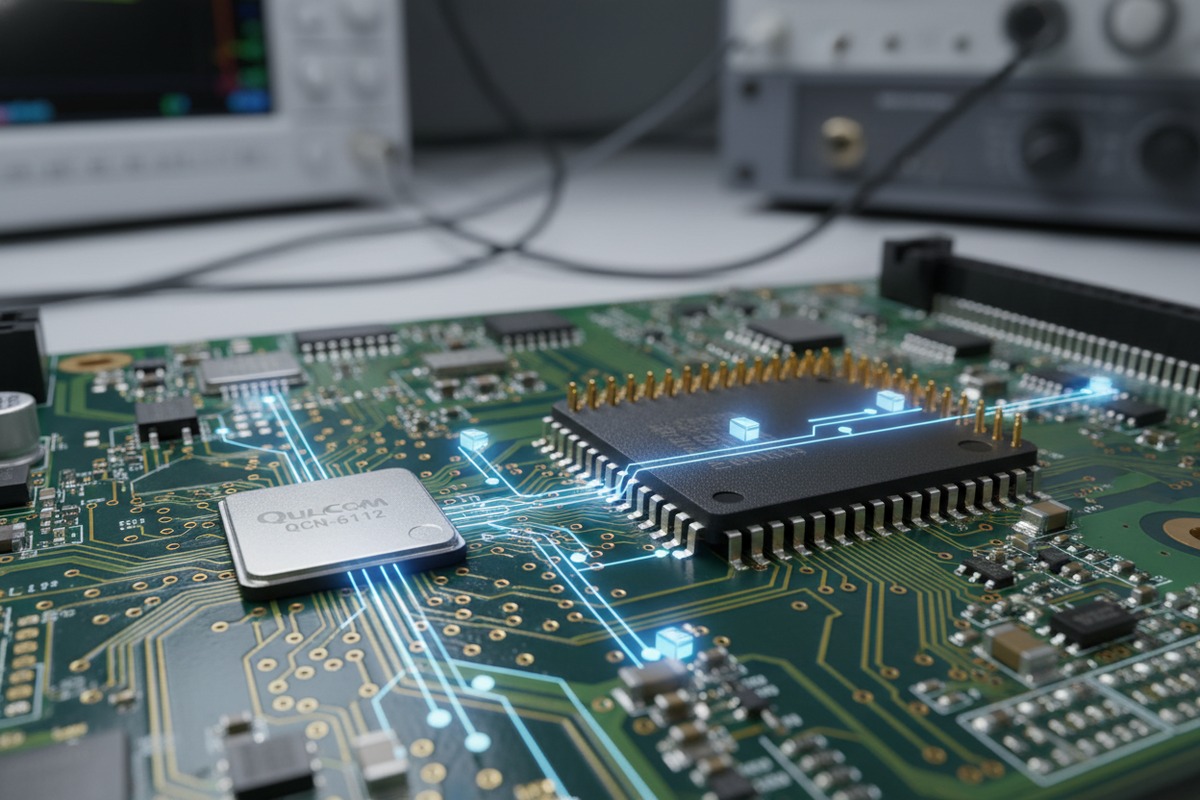
Global semiconductor supply has stabilized since the 2021-2022 chip crisis. But Qualcomm Wi-Fi modules remain in high demand across automotive, IoT, and consumer electronics. The QCN-6112, being a specialized IoT chipset, does not have the same production volume as mainstream smartphone SoCs. This means supply can tighten quickly when demand spikes.
From our Hong Kong and Shenzhen warehouses, we track inventory levels daily. Lead times for Qualcomm IoT parts typically range from 12 to 20 weeks through authorized channels. Spot market availability fluctuates. Planning ahead is not optional — it is essential.
Pricing for the QCN-6112 depends on volume, packaging format, and sourcing channel. The DRQFN116-TR-01-0 designation indicates tape-and-reel packaging, which is standard for automated pick-and-place assembly.
Here are the main factors that affect your unit cost:
We recommend a three-pillar approach:
Pillar 1: Diversify suppliers. Do not rely on a single source. Work with at least two verified suppliers — one authorized distributor and one trusted B2B partner.
Pillar 2: Buffer stock. Keep 8 to 12 weeks of inventory on hand. Store it in a humidity-controlled environment, since the QCN-6112 is a Level 3 moisture-sensitive device.
Pillar 3: Lifecycle monitoring. Qualcomm periodically updates its IoT product portfolio. Sign up for product change notifications (PCNs) and end-of-life (EOL) alerts. If the QCN-6112 gets deprecated, you need lead time to qualify a replacement like the QCN-6122 or QCN-9274.
German smart gateway projects often have 10+ year operational lifecycles. The QCN-6112 is a current-generation part, but semiconductor products typically have a 5-7 year active production window. After that, last-time-buy opportunities arise.
For manufacturers targeting the German market, this means planning your Bill of Materials (BOM) with future-proofing in mind. Consider whether Wi-Fi 6E is sufficient or if a migration path to Wi-Fi 7 should be designed into your gateway platform from the start. This decision affects both supply planning and long-term competitiveness.
Given the critical infrastructure nature of smart gateways, Qualcomm must provide consistent firmware updates and security patches for the QCN-6112 throughout your product’s lifecycle. Negotiate a firmware support agreement with Qualcomm or their authorized software partner. Without ongoing security updates, even a perfectly sourced chip becomes a liability in the German market.
The Qualcomm QCN-6112 is a powerful Wi-Fi 6/6E chip, but it cannot serve as a standalone German SMGW solution. Use it as a connectivity sub-component within a fully BSI-certified gateway platform instead.
1. Provides information on the international standard for computer security certification. ↩︎
2. Replaced with a Wikipedia page providing a comprehensive overview of Wi-Fi 6, including speed information. ↩︎
3. Provides information on Germany’s regulatory framework for consumer IoT cybersecurity. ↩︎
4. Explains the German intelligent metering system (iMSys) and its rollout. ↩︎
5. Defines a Home Area Network (HAN) and its role in connecting devices within a home. ↩︎
6. Explains WPA3, the latest Wi-Fi Protected Access standard, and its security enhancements. ↩︎
7. Discusses the serious problem of counterfeit integrated circuits in the electronics supply chain. ↩︎
8. Official BSI information on the German Metering Point Operation Act (MsbG). ↩︎
9. Official BSI overview of the technical guidelines for Smart Meter Gateways. ↩︎